I had a similar experience with disk drives. They were too expensive, so I had to stick to the built-in tape unit of my Amstrad CPC464. I could save programs, which made a huge difference, but tape was very limited in capability. For example, I couldn't write programs running other arbitrary programs, or programs working on databases. What I wrote was very limited in utility, usually games. Even running an assembler (which I got to hold on very late anyway) was a quite complicated process on tape. Now, after reading your story, I can't imagine being even without a tape. I at least managed to learn BASIC and Z80 Assembly with just a tape.
I was also very young and did not have a good enough grasp on money yet, but for us, in Germany, I remember the 1541 disk drive for the Commodore not being cheap, but still everyone I knew with a C64 got one, so the cost must not have been too prohibitive. The "Datasette" tape drive was much cheaper as I recall, but because of the disk drive's propensity I only knew one person who had it (and probably barely used it).
Depended a lot on the region I guess. I hear that in Britain for some reason the tape decks were much more common. But Britain kind of got an "alternative history" of home computing anyway, owed largely due to their computer literacy program and (partly) resulting British micro industry. Many of those products barely made it to the continent, some not at all, so it's hard to compare.
Ah, I was too young for multiple drives. While my parents probably saw the futility of not having a disk drive at all, shelling out the hundreds of DM for a second one was likely too much.
And with no own money I put up with what I had. I nowadays suspect that the grease in my then rather old 1541 must have hardened, because it needed the occasional hard slap on its case to continue loading, it would "hang" in the middle of a disk access until you did that.
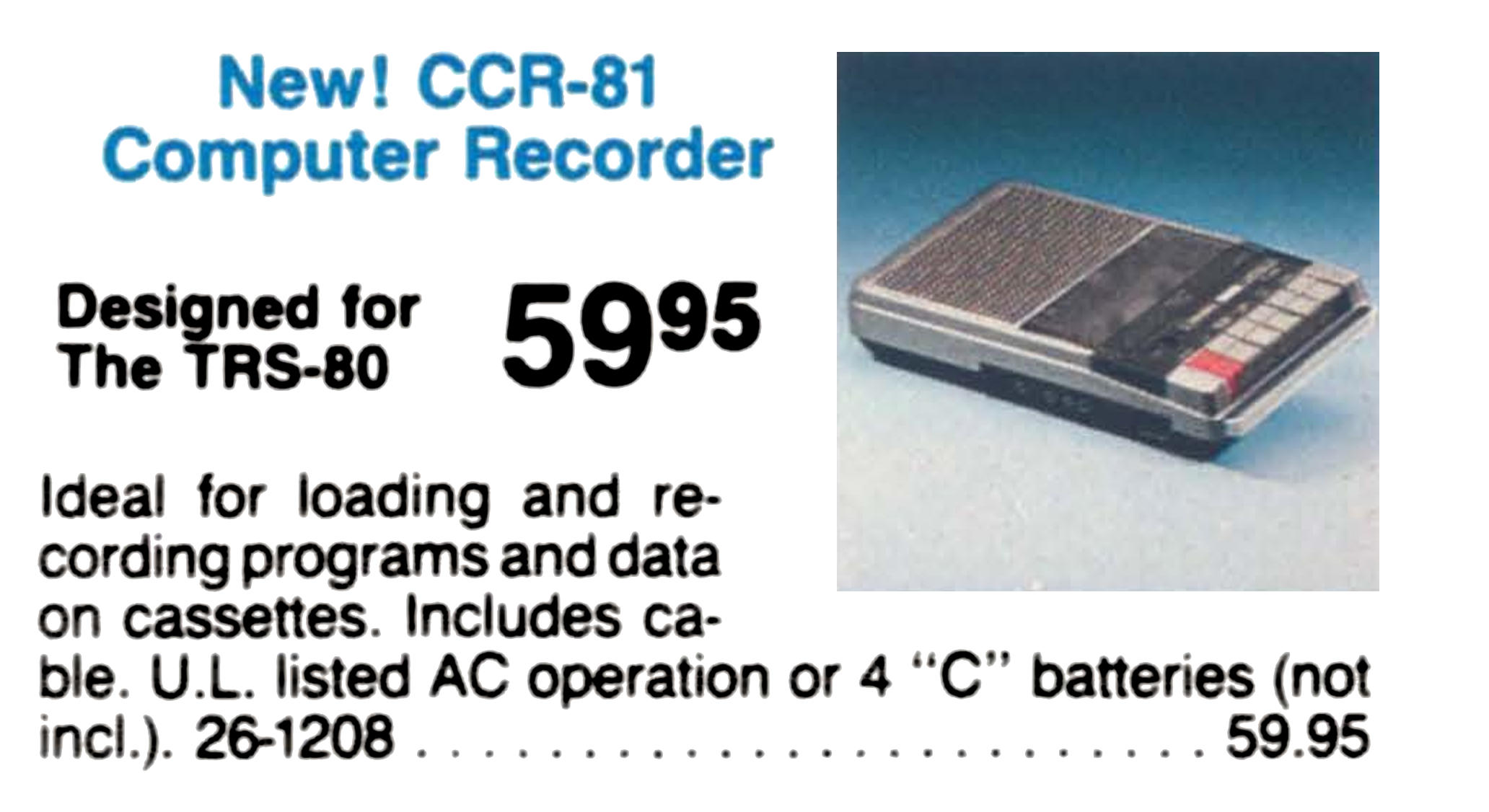
The "ready to use" one with the 5 pin DIN connector/adapter was probably expensive.[1] Otherwise, he would have had to find an adapter or fiddle making one himself. And even that would require a cassette player with all the right jacks (mono in, mono out, remote). They didn't all have those.
No one here can tell you whether your father was right or wrong. A tape deck and connection cable would have cost $35-$60 in the early 90s, which your father might have seen as closer to:
A) A week's groceries for the whole family, or
B) A single evening's entertainment for one person.
"The Magazine of the National Endowment for the Humanities" How is this excerpt not relevant to the stated mission of the publication? The article goes beyond the scope of mere engineering.