> You mean like bombing a school and killing about 150 schoolgirls?
Even Hamas knows western powers don’t do this on purpose - which is why they take up arms inside of civilian facilities. The Iranian people know the US doesn’t intentionally kill little girls.
Meanwhile the Iranian government quite literally has killed upwards of 30,000 people (maybe some were little girls even) and is hanging people in the public square for protesting.
Not to mention Iran intentionally targeting apartment complexes and other civilian targets throughout the region. Why are we even talking about the US accidentally blowing up a school? We should be talking about Iran and their revolting crimes instead.
The US attacked Iran because Israel was going to do so anyway. If they didn't attack, that missile wouldn't have killed 150 schoolgirls. Sure, the target was a mistake, but mistakes happen when you shoot thousands of missiles and drop thousands of bombs. If they had not attacked, the girls would be alive.
If Iran hadn't funded and supplied Hamas who then attacked and killed how many people (how many were little girls who were murdered and raped by Hamas?) then Israel wouldn't have had to bomb Iran.
You can go back and forth on who did what first but it ultimately accomplishes nothing in this scenario.
If Israel wants to bomb Iran, whatever, that's Israel's problem. The fact that we (the United States) continue to give unquestioning support to Israel is the problem. If Israel want's America's help, they should need to heel to America's interests, and I completely fail to see how fucking up the global oil trade benefits us.
I don't think it's quite that simple. Of course you know the isolationist point of view goes many directions. If Russia wants to bomb Ukraine, whatever, that's Ukraine and Russia's problem, &c. (I believe in engagement in both conflicts myself). Israel alone can't really stop Iran anyway besides their "mowing the grass" strategy but how long will that work?
But you have to think about the future state. What does an Iran that continues to:
  - Build and supply drones and drone technology to Russia
  - Build and purchase missiles and missile launchers
  - Continue to pursue a nuclear weapons
  - Continue to fund groups recognized as terrorist organizations by the United States, European Union, and others
.... look like?
Well, if they have 1,000 missiles today and that's giving us a problem (I'm not sure the true extent to which it is a problem really) and then they have 5,000 missiles tomorrow maybe sprinkle in some Chinese hypersonic missiles just to see if they can take out an American aircraft carrier or other sensitive military equipment, and now when Iran decides to close the Straight or tax the Gulf States or whatever other crazy idea they get in their heads we're facing a much, much bigger problem. It's like having a North Korea in the Middle East. We can't have that. We have seen that movie already and it does not turn out great.
And that's excluding nuclear weapons or an arms race in the Middle East. You can certainly see how easy it would be for the Gulf States to decide Iran is such a threat that they start loading up on missiles and maybe everyone decides they need a nuclear deterrent and now we've got maybe 2-3 countries including Iran with nuclear weapons and there's nothing we can do about it.
Folks like to paint this as an Israel problem, and yea they've done some bad stuff too but this isn't just an Israel problem nor is it just an America problem. It's just that unfortunately the United States is the one that yet again has to go be involved to try and deal with some chaos now to prevent an untenable situation later.
I think it's certainly worthwhile to debate various assumptions, capabilities, &c. but at the end of the day it's important to actually take a look at many aspects of this situation and to try peace together what's really driving this conflict. If your frame of reference is just "what are we doing there?" I'm afraid it puts you at a real disadvantage in terms of understanding the conflict and its repercussions.
I firmly believe a nuclear-armed Iran would be a net positive for world stability. It's not an ideal state of being, but with the existence of a nuclear armed Israel destabilizing the entire region, there needs to be a check against them. But that's besides the point, because by all accounts except on odd-numbered days the Whitehouse's, Iran was responsibly following the non-proliferation agreements that we had made with them under the Obama administration. Either way "Iran might make nukes" is bad reason to start a war.
If "Iran is aiding Russia against Ukraine" was a good reason to start this war, then we should be a lot less wishy-washy about our support of Ukraine themselves. The fact that we keep playing "will they won't they" with ongoing support to Ukraine is in no small part why that war is still ongoing.
And Israel is, absolutely, unequivocally, America's problem. They exist because we decided they should exist, we armed them to keep them existing, and we get involved in absolute quagmires in the Middle East every time that they do something stupid. Every time Israel does some fucked up shit, the UN goes "wow, we should acknowledge that was some fucked up shit", and the only country that consistently backs Israel is the United States.
I am not an isolationist. I fully recognize, and appreciate, the US's (potentially soon to be former) place as global hegemon. But we achieved that position by leveraging soft power, while maintaining the capability to absolute smite parties that won't play ball. And that worked. It worked great. It's why backing Ukraine was a great play: No American lives at risk, we pay a few bucks, Ukraine damages Russia, we remind our allies just how great it is to be under America's umbrella.
But Israel bombing Iran is not the same thing. Israel and the United States are the aggressors in this conflict, plain and simple. We had half-normal relations with Iran, then because Israel decided they weren't content being one of two regional powers, we decided to kick off another damn war in the Middle East.
> Either way "Iran might make nukes" is bad reason to start a war.
I think we disagree here, but that's because I believe in nuclear non-proliferation. More countries have them, more likely they are to be used. If Iran gets them, well maybe South Korea, Japan, Germany, Saudi Arabia, Brazil... the list goes on. Is that a better and safer world? I doubt it. Not only are arms races probably bad, they take up resources that could be used for making the lives of everyone better.
> If "Iran is aiding Russia against Ukraine" was a good reason to start this war, then we should be a lot less wishy-washy about our support of Ukraine themselves.
I think it's a contributing factor, but not the sole reason to start (or depending on your perspective, continue) a war here.
> And Israel is, absolutely, unequivocally, America's problem. They exist because we decided they should exist, we armed them to keep them existing, and we get involved in absolute quagmires in the Middle East every time that they do something stupid.
I don't follow this line of reasoning. Israel has existed long before the United States. Admittedly the modern state of Israel as we know it today was carved out in the last century, but the fault there lies primarily with European countries who created empires and then failed to maintain them. But you sort of seem to be justifying things like October 7th or other aggressive actions perpetrated by Iran and its proxies as though Israel existing is just somehow a problem. Last I checked Iran is its own country. What justification does it have to bomb Israel in any way?
> But Israel bombing Iran is not the same thing. Israel and the United States are the aggressors in this conflict, plain and simple. We had half-normal relations with Iran, then because Israel decided they weren't content being one of two regional powers, we decided to kick off another damn war in the Middle East.
Don't recall the US being in a state of war prior to October 7th. Iran overplayed their hand, Israel absolutely fucked up Hamas and Hezbollah with little effort, and then we found out Iran was pretty weak and so we did something about it before they accumulate so much military power that stopping them from effectively taking over the Middle East is untenable. I'm not sure your cause-effect reasoning here makes a lot of sense. We haven't had half-normal or normal relations with Iran for a long time - like 50 years.
> I am not an isolationist. I fully recognize, and appreciate, the US's (potentially soon to be former) place as global hegemon. But we achieved that position by leveraging soft power, while maintaining the capability to absolute smite parties that won't play ball. And that worked. It worked great.
It seems that you're cherry-picking here. The US attacking Iran can just be another case of smiting parties that won't play ball. Same with Iraq, or Vietnam, or Korea.
> It's why backing Ukraine was a great play: No American lives at risk, we pay a few bucks, Ukraine damages Russia, we remind our allies just how great it is to be under America's umbrella.
I generally agree and watching Russia's military be absolutely humiliated was exhilarating, but providing money alone isn't enough to win or stop that war it seems.
The US is still helping, but for some reason when it comes to Iran actually selling and supplying drones that kill Ukrainians it's all of a sudden well that's not a good reason to go to war, Iran isn't the aggressor, Trump is bad, how dare the US stop Venezuela from evading US and EU sanctions, blah blah blah. You're twisting yourself into circles trying to defend Iran for some reason when they're murdering their own population for protesting, helping Russia bomb Ukrainians, and starting wars and destabilizing Yemen, Lebanon, and more. Speaking of the UN, weren't they supposed to stop Hezbollah from indiscriminately launching rockets into Israel? Now Israel is there cleaning house and all of a sudden well that's Americans problem, Israel is America's problem, how can Israel do this? Who cares about the UN in today's world?
Are you unfamiliar with the October 7th attack? This alone proves the point, never mind we can get into details of the Middle East slave trade, general violence perpetrated by Hamas, and well, of course Hezbollah, Iran, &c.
On October 7, 2023, Hamas launched the largest-ever terrorist attack on Israeli soil. The Palestinian organisation, considered a terrorist group by the EU and the US, stormed through the security fence separating Gaza and Israel in the early morning, killing 1,189 people, including 815 civilians, wounding 7,500 and taking 251 hostage.
Not an embellishment, though you are right that the tragedy alone proves my point.
Anyway back to Iran - those are the bad guys.
Their regime killed by many estimates 30,000 of their own people for peacefully protesting already. They're conscripting child soldiers [1], attacking apartment buildings in neighboring Gulf States, and are hanging people as young as 19 for protesting [2]. They're actively helping Russia prosecute their war against Ukraine by selling drones and other technology. They're responsible for funding and inciting terrorist groups as recognized by the United States and European Union (Hezbollah, Hamas, and more) which have indiscriminately attacked civilians in many countries and continue to threaten international shipping even prior to American attacks on their military infrastructure. They're doing all of this while pursuing a nuclear weapon, which will of course be a catastrophe for nuclear non-proliferation as the Gulf States will certainly work to acquire their own, and they've been ramping up and deploying extensive missile capabilities so that they can force Gulf States to acquiesce to any of their demands, else they attack and shut down oil shipments. Tehran ran out of water because the money the regime has was spent on military forces and funding destabilizing proxy military groups for no good reason.
Ok I'm "spreading debunked Israeli lies" - they were only murdered, not raped and murdered. At least what the US did was an accident, unlike what Hamas did.
What point are you trying to make here? We're talking about the atrocities that Iran has committed and how it is responsible for so much death and destruction.
You're blindly believing the propaganda from two truly evil governments (Israel, USA) about a country that they absolutely want to destroy. Why don't you question the legitimacy of what they tell us.
> Even Hamas knows western powers don’t do this on purpose - which is why they take up arms inside of civilian facilities. The Iranian people know the US doesn’t intentionally kill little girls.
You really think someone who just had to bury the mangled, burned corpse of their daughter cares whether it was intentional, or because the US military couldn't be arsed to update the data their targeting system operates on?
And it's not going to end with that one "accident". The war hasn't even really started, and the US military is led by a vaguely human-shaped lump of feces who absolutely will start ordering the intentional bombing of civilian targets and gleefully boast about it once he's starting to feel personally offended by the continued failure of "the Iranians" to submit to his will.
> Why are we even talking about the US accidentally blowing up a school?
Asking that question puts you outside the boundaries of polite conversation, so I'll end with a hearty "may you get what you deserve".
Do you really think someone who just had to bury the mangled, broken-necked corpse of their son cares whether it was intention.... oh right it was intentional by their own government.
> Asking that question puts you outside the boundaries of polite conversation, so I'll end with a hearty "may you get what you deserve".
Please stop the pearl-clutching.
If you don't want to talk about intentional Iranian atrocities because you're fixated on the United States making a mistake, then I don't think there's much for either of us to talk about.
> Not to mention Iran intentionally targeting apartment complexes and other civilian targets throughout the region. Why are we even talking about the US accidentally blowing up a school? We should be talking about Iran and their revolting crimes instead.
My family are in the GCC, and my parents live near the coast. Iran has not once targeted a civilian infrastructure there directly, except for specific landmarks (Burj al Arab, the Palm, etc.). Whenever Iran prepares a barrage, they usually announce it on state TV, which is then picked up by local authorities or by social media channels. All the attacks that have resulted in deaths in civilian settings are due to intercepted debris falling on civilians. If Iran wanted to destroy Dubai and kill civilians, they could've easily done that by just swarming the skies with drones and exact maximum damage - but they haven't done that. It also doesn't help their case either - most civilians in the GCC are foreign expats, and the backlash against Iran from most countries like Russia, India, China and Pakistan would be severe. Iran isn't stupid, as much as you'd want to believe that.
Civilian life in the GCC is still pretty normal, except for the downturn in business and the lack of tourists during the season. People are losing jobs and Airbnbs are turning into long-term stays. But otherwise civilian life is still pedestrian - heck, my younger brother is going to the Atlantis water park tomorrow because they offered him free tickets.
Israel is obviously a different story, being directly responsible for attacking civilian targets in Iran.
> My family are in the GCC, and my parents live near the coast. Iran has not once targeted a civilian infrastructure there directly, except for specific landmarks (Burj al Arab, the Palm, etc.).
That's still not ok, still targeting civilian settlements and infrastructure which is of no military value. Stop making excuses.
> But otherwise civilian life is still pedestrian - heck, my younger brother is going to the Atlantis water park tomorrow because they offered him free tickets.
That's really cool. Life is pretty normal here in the US too. In Israel from what I understand most folks just have to go to the air raid shelters once in a while but life is otherwise pretty normal.
> Israel is obviously a different story, being directly responsible for attacking civilian targets in Iran.
Likewise Iran is directly responsible for attacking civilian targets in Israel and other gulf states. I'm not sure life in Iran is really all that normal though. Tehran ran out of water in part because Iran instead spent money on offensive war capabilities and funding terrorist groups, and then they murdered around 30k of their own people. Sounds like most everyone else is living normal lives (Israel, Gulf states, US) but things are not great in Iran under the current leadership and their mismanagement of the country.
1.) Iran warns civilians days in advance with the exact date and time - establishments are warned beforehand. Pray tell, when did the US or Israel warn Iranian civilians in Tehran about the same? This is about equivalence, not whataboutism.
2.) Unlike for the privileged West, this is Iran's last stand for survival. What started as a "regime change" operation has turned into a "send Iran to the Stone Ages" operation. While I don't condone their regime's actions, I can understand them applying pressure on the GCC countries, especially the ones that goaded the US into the war. More importantly, it's telling when citizens of said GCC countries are on the Iranian side in spite of being attacked. Just check Al Jazeera (the most popular Arabic media outlet) and their coverage in spite of being an Iranian target. Check all the open criticism coming from business circles of the wealthy magnates in the GCC.
3.) Unlike Israel, the GCC countries don't have air raid shelters, but because of the above, casualties have been much lower. Again, that's because of Iran's early warnings and the respective countries' countermeasures. Iran has a vested interest in preventing civilian deaths in the GCC, unlike the US and Israel have in Iran.
4.) Iran's attack on Al Minhad airbase (which is close to where some family live), showed that they can inflict casualties and turn any GCC country to glass if they wanted to, just by concentrating force.
5.) Life in Iran isn't normal, precisely because Israel and USA are intent on bombing it to smithereens. Your arguments otherwise about water in Tehran and protests are pre-war tangential arguments. As mentioned above, Iran could make life in the GCC "abnormal" if they wanted to - they just haven't yet because they haven't been pushed to the brink.
> Pray tell, when did the US or Israel warn Iranian civilians in Tehran about the same? This is about equivalence, not whataboutism.
Why would they warn them when they don't intentionally target civilian infrastructure?
> Unlike for the privileged West, this is Iran's last stand for survival.
We're privileged because we generally don't do really dumb and awful things like what Iran is doing. If they spent their wealth improving the lives of their citizens instead of on missiles Iran would be in a much better state. The responsibility for that failure and lack of "privilege" falls squarely on the shoulders of the regime running Iran.
> Unlike Israel, the GCC countries don't have air raid shelters, but because of the above, casualties have been much lower. Again, that's because of Iran's early warnings and the respective countries' countermeasures. Iran has a vested interest in preventing civilian deaths in the GCC, unlike the US and Israel have in Iran.
I'm not interested in excuses like this for targeting civilians and civilian infrastructure. The United States and Israel have done much more than Iran has to protect civilians and it shows in the way that the United States and Israel only target military infrastructure which Iran is using to lob missiles at... civilians in other countries!
> Iran's attack on Al Minhad airbase (which is close to where some family live), showed that they can inflict casualties and turn any GCC country to glass if they wanted to, just by concentrating force.
Likewise the United States can turn Iran into "glass" if they'd like.
> Life in Iran isn't normal, precisely because Israel and USA are intent on bombing it to smithereens.
Factually incorrect statement. Life in Iran isn't normal because of the actions of their government.
> Your arguments otherwise about water in Tehran and protests are pre-war tangential arguments.
It's a common theme and actions pre-war are related to actions during-war as well. It's a bad government that has mismanaged itself into the situation it is in now and that mismanagement falls squarely on their shoulders.
> As mentioned above, Iran could make life in the GCC "abnormal" if they wanted to - they just haven't yet because they haven't been pushed to the brink.
"I'd kill you but you just haven't made me mad enough yet". Sounds like an unhinged viewpoint to me. That's no way to run a country or treat your neighbors.
> Not to mention Iran intentionally targeting apartment complexes and other civilian targets throughout the region.
You realize that Iran provided 24h notice about attacks that were upcoming today advising people to evacuate and Israel bombs hospitals without warning, right?
What does that have to do with Iran indiscriminately bombing apartment complexes and high rises and civilian infrastructure in countries like the United Arab Emirates? What does that have to do with Iran massacring 30,000 of its own citizens and hanging 19 years old kids for protesting as recently as yesterday?
If Israel or the United States bomb a working hospital (and even then it depends) I stand against that. Though of course even your premise is generally questionable because terrorist groups like Hamas, Hezbollah, and others (as recognized by the European Union and United States) know that Western forces do not on purpose bomb or attack civilians or civilian infrastructure and have a difficult time when Hamas/Hezbollah fighters lodge themselves in mosques, elementary schools, hospitals, which is why they do it - they understand we are culturally against such practices.
But if they bombed a hospital they'll have to bomb a lot of hospitals before they approach the death totals that the Iranian government has already inflicted on its own people.
> What does that have to do with Iran indiscriminately bombing apartment complexes and high rises and civilian infrastructure in countries like the United Arab Emirates?
USA soldiers were in those buildings because they'd been moved off-base. But at this point, you're not arguing in good faith. You wouldn't know about that without the part about our people being the targets so I don't trust you to be forthcoming at all.
> USA soldiers were in those buildings because they'd been moved off-base.
Source please.
> You wouldn't know about that without the part about our people being the targets so I don't trust you to be forthcoming at all.
Iran launched 2500 missiles at the UAE alone, and those missiles hit obvious civilian infrastructure including where US soldiers weren't, airports, &c. and has threatened unprovoked to blow up desalination plants to cause mass famine and destruction. No excuse for that. Sorry, Iran is the bad guy here and their actions prove that without question.
Ok by that same logic almost all areas of Iran are valid military targets because IRGC soldiers are spread throughout the country. Nevermind that they're recruiting children now. [1]
By that same rationale you'd justify blowing up schools. I don't find that to be a good enough argument to deliberately target civilian infrastructure. But if you do, then it justifies the US and Israel too.
We can remove them and do the isolationist thing as many have been clamoring for. Then we have no need for bases in Europe or the Middle East. Gulf States can figure out how to live with a nuclear armed Iran or one that has a repository of thousands of missiles to blow up gulf state infrastructure when they misbehave. We can remove the bases in Europe too, and when Russia invades Lithuania the Spanish and Germans can take care of it.
Or perhaps these bases aren’t just in allied countries “at their grace”. These alliance systems don’t just solely benefit America.
I mean, theres meant to be intangibles, and some financial support. Most of the financial support got cut by doge and the rest would go with leaving NATO. The intangibles literally never eventuate. Australia tried to invoke ANZUS with East Timor and got brushed off, despite the various US facilities in Aus being sold to the australian voter as insurance that the US would help if requested.
Honestly the US as a strategic partner is just a joke. its nothing but sigint.
I don't disagree with you, but just pushing back on this high-and-mighty "we let you be here" sensibility from the OP. For some reason folks seem to have become convinced the opposite way from MAGA that these bases only serve American interests which is certainly not the case. Likewise the bases also don't only serve the interest of others, they allow us to have more flexibility in our objectives and responses to issues that we see.
Its equally misleading to pretend like the bases have just a couple small benefits for the US. Come on, please. You dont believe it either. Ah yes, the post world war doctrine has been so that the us can have more flexibility. Sure thing. What a waste it has been for European Nations to have sacrificed lives for Americas wars the last decades.
I agree with you, it is misleading. But there are two sides who are both being misleading - that's all I'm calling out here.
> What a waste it has been for European Nations to have sacrificed lives for Americas wars the last decades.
I personally don't support any comment suggesting that Europe hasn't at times been there for us in these conflicts or that their sacrifices weren't meaningful. But that's only part of the equation. We're in a different world from where we were in 2001 and things change and so you can't just hang your hat on this one thing, else we (Americans) get to hang our hat on any time period we want to as well where Americans sacrificed for Europe.
The whole "we did this then" is driving a lot of folks into lunacy, but there does seem to be material differences and that is concerning if you believe in these alliance systems which I generally do.
You have folks on this website who would tell you the US is actively working with Russia against Ukraine, and then in the same breath defend Iran from the US blowing up drone factories that Iran is using to manufacture drones for Russia to use to go murder Ukrainians! Kind of hard to have a conversation or an alliance if a population is being convinced of absolutely crazy things like this.
Sort of. The management or mismanagement of the war (and it is a war) falls squarely on the shoulders of the President and the current Secretary of Defense.
But you have to also look at the reality of the situation. Iran was selling drones and weapons to Russia to help it prosecute its unjust war in Ukraine. They were loading up on missiles and missile launchers and regardless of the Obama nuclear deal was intent on obtaining a nuclear weapon. Where does that leave the world strategically?
Well, if you have an Iran that, never mind the nuclear aspect, has thousands and thousands of missiles and can rain hell upon its Gulf neighbors and decide to "manage" the Straight of Hormuz whenever it wants - you are not in a really bad spot. We saw what happened with North Korea. I don't think we want another one in the Middle East. And if Iran continues or continued to build up weapons, the Arab states are obviously going to load up and they're going to buy/build nuclear weapons themselves. This is untenable.
There seems to be this misunderstanding that Iran is just this country who happens to want to wipe the United States and Israel off the face of the earth (regardless of who did what and when) and if only somehow the United States withdrew from the Middle East (I wonder why they want that? hint hint) and "stopped supporting Israel" that Iran would let ships happily just pass through this straight and all would be just fine. The truth of the matter is that Iran was seized by religious fanatics and the world giving in to that fanaticism just emboldens it, it doesn't placate it. Just like with Russia - if you give in to Putin he just asks for more.
Yet again the United States faces a damned if you do, damned if you don't situation. Launch airstrikes and stop Iran from doing what it is doing. Bad bad bad. Leave Iran alone, withdraw from the Middle East - now you're isolationist and you withdrew from the world and allowed Iran to "kick you out". Gulf states become vassals or nuclear armed in response. It's not great.
A lot of folks are talking about the United States and how it is withdrawing from the world and such. Well, here's an example right in front of you. If the US had pulled out as Iran demanded and said "not our problem" you'd now have an Iran full-on supporting Russia, providing missiles, drones, and more, control over 20% of the world's oil supply where they can exact tolls, turn Gulf States into vassals (for those who can't get a nuke), and would continue to directly pay, arm, and supply groups throughout the Middle East and elsewhere to destabilize other countries and kill people including in Israel, Lebanon, Yemen, and more.
> If the US had pulled out as Iran demanded and said "not our problem" you'd now have an Iran full-on supporting Russia, providing missiles, drones, and more, control over 20% of the world's oil supply where they can exact tolls, turn Gulf States into vassals (for those who can't get a nuke), and would continue to directly pay, arm, and supply groups throughout the Middle East and elsewhere to destabilize other countries and kill people including in Israel, Lebanon, Yemen, and more.
You're describing the current situation. The tolls are new, as a response to the war! They've been supplying Russia with drones for years! They've been funding groups throughout the Middle East for decades!
> You're describing the current situation. The tolls are new, as a response to the war!
You're assuming that you know their strategy, and you don't. They very well may have been planning to do so in the next 5 or so years. Even if they didn't plan on that, they were building up their missile production and accumulation to an extent where the damage we've seen today is pedestrian in comparison. They could at a whim, just say "give us X or we close the straight".
> They've been supplying Russia with drones for years! They've been funding groups throughout the Middle East for decades!
Yea, and we've basically done nothing about it because we've been trying to avoid confrontation... but maybe Iran shouldn't be doing these things. Just a thought.
> Our accelerating that doesn't seem like a big win so far.
Maybe this can help.
It's 2025 and Iran has 1,000 missiles (just random rough numbers).
It's 2030, and Iran now has 5,000 missiles and bought a bunch of hypersonic missiles from China.
Sure, we can just "not accelerate" this, but then we're not going to do anything about it in 2030 because nobody is going to accept being on the receiving end of so much destruction.
> They've been able to do that for decades.
Not quite - they've had varying levels of capability here. Until recently they haven't had the missile and drone stockpile that they have today and have been building.
its not either or. if we expected support from European countries, we could have given them a heads up and understood their position in advance. it was not an emergency situation. we had an agreement, I know that doesn't mean shit to the current administration, but not every country is willing to go cowboy, and give up their sovereignty just because the US doesn't like rules and laws anymore. the US would clearly be in a better position now if it hadn't said 'screw you guys' and started shooting.
I largely don't disagree with you, but at the same time had Trump asked they would have told him no anyway because Europe has little to no ability to help here and they're scared. As European prime ministers and officials have said already, and I'm paraphrasing "what can a few frigates do that the mighty US Navy cannot?". It rings true, as did the comment from the I believe Polish prime minister (or perhaps the foreign minister, either way) which said 600+ million Europeans are asking 300+ million Americans to defend them against 180+ million Russians. Something doesn't quite add up here.
I mean, they are controlling Hormuz Strait now - they were not before the war. In addition they are now free to sell their own oil, because the sanctions have been lifted. And I can't see why they would stop supporting Russia with drones either. They also got to keep their enriched Uranium. I don't think I can name a single reasonable objective that US have achieved with this war.
> And I can't see why they would stop supporting Russia with drones either. They also got to keep their enriched Uranium. I don't think I can name a single reasonable objective that US have achieved with this war.
It's been 3 weeks... we're going to stop the enrichment. We can stop the drone supply by blowing up the factories.
> I mean, they are controlling Hormuz Strait now - they were not before the war. In addition they are now free to sell their own oil, because the sanctions have been lifted.
They were de facto "controlling" the straight anyway because of their missile stockpile, they just hadn't yet exercised their leverage. They're free to sell their oil to the extent the US allows them to based on whatever decisions are being made. Obviously we can just blockade the straight too, even more effectively than Iran has been.
This is a brilliant example of DARVO: The US and Israel decided to attack Iran but somehow they had no choice and are actually the victims in all of this.
Well, in part you are asking about the world economy. Most of the world doesn’t have 401k retirement vehicles, good access to financial markets, or the spare funds to save at all, whether it’s in stocks, bonds, or other investment vehicles.
So the reason you haven’t gotten an answer is because your question doesn’t make much sense.
A 401K is just an investment in indexes linked to your pension, there's nothing stopping everyone putting their own money into an index themselves. The question makes sense, how many people could the market support if everyone was investing and not spending.
>how many people could the market support if everyone was investing and not spending.
I think the more salient question is how many people could the market support if everyone was consuming and not producing.
Not producing as in the goods and services that people want such as clean toilets and food and nursing home care. Or not producing the kids who will go on to produce the aforementioned goods and services.
> A 401K is just an investment in indexes linked to your pension, there's nothing stopping everyone putting their own money into an index themselves
This is mostly incorrect.
A 401k in the United States is a tax-advantaged investment account. You can buy shares of individual companies, you can purchase index funds, you can leave it there as cash, buy gold, or just about anything you want or you'd expect to be able to purchase using a brokerage account. Depending on the route you take (Roth or Traditional) you can realize tax savings now or at a later point. 401k Accounts are programs offered by your employer as well [1].
One of the many reasons the OP's question doesn't make sense is because not every country in the world has a 401k program.
[1] There are other programs for individual owners or for those who have an employer that does not offer a 401k.
People can invest in markets without a 401k with more options (plans commonly have only a handful of funds available) and less fees (both admin fees and inflated fund expense ratios). And you may pay more taxes with a 401k than otherwise depending on your future tax rate (which is unknowable).
The only pure advantage is employer matching if you have it and stay employed long enough for it to vest.
An overabundance of investment without an outlet would just decrease yields. Hypothetically the yield could go negative.
It is a self correcting problem. If the yields are too low people can spend it on hookers and blow before dropping it into a money shredder. The yield shouldn't drop much below the premium for the time preference of money.
Self-sufficiency is a myth. Even if you wanted to try and be energy independent, for the short and medium term (and maybe longer, who knows?) you will be dependent on China and all the baggage that they bring because of their dominance of rare earth mineral processing. Need a new solar panel? Don't make a certain country mad (whether that's your local Ayatollah or CCP official).
And that's just energy. What about pharmaceuticals? Financial markets? Who protects your shipping lanes? Who builds your semiconductors? Where do those factories get their energy from?
I support the diversity of energy sources because they all have strengths and weaknesses. We've got to figure out climate change. But we also can't have, even if you want to somehow "move off of oil" a single country run by lunatics who can decide whenever they don't get their way that they get to seize 20% of the global oil supply. We can't have China dominating rare earth processing either. For some others it may be a reliance on American military technology.
There is a huge difference between buying a solar panel once and having it generate energy for the next 30 years vs. buying a barrel of oil now and consuming it by next week.
It's the same difference as buying a house now and owning it until it collapses vs. renting a house and being at the mercy of your landlord, or buying a piece of shrink-wrapped software and using it for the next 18 years vs. renting a SaaS subscription that provides a different product next month.
Old hardware or emulation of old operating systems on new hardware.
Quite common on old industrial machinery and other capital equipment like lab equipment. San Francisco BART for example has to scrounge eBay for old motherboards that still allow DMA to parallel ports via southbridge because it’s too expensive to validate a new design for controllers.
I have a G5 with a bunch of old boxed software that runs as well as it did the day I bought it. And an Xbox 360 with the same. Not everything has to keep up with the times.
Not all software can be sufficiently insulated from external changes, but almost all software I care about can be. My normal update cadence is every 2-3 years, and that's only because of a quirk in my package manager making it annoying for shiny new tools to coexist with tools requiring old dependencies. The most important software I use hasn't changed in a decade (i.e., those updates were no-ops), save for me updating some configurations and user scripts once in awhile. I imagine that if I were older the 18yr effective-update-cycle would happen naturally as well.
My gut reaction is that the software you're describing relies heavily on external integrations. Is that correct?
He had upgrades, but I was running Kubuntu about 20 years ago, still have a bunch of Red Hat and Mandrake ISOs from the early 2000s, and can confirm they still work.
Beside, on the rate earth materials, it just happen that China is able to exploit it cheaply but other countries also have access to them and could very well exploit.
> other countries also have access to them and could very well exploit.
only in your wet day dreams.
let's just look at Gallium which is arguably one of the most critical for defence. to produce 100 tons of Gallium, which counts for 10% of the global supply each year, you have to have 200 million tons of Alumina capabilities. "other countries" won't be able to do it, as they don't have affordable electricity and skilled workers to make the Alumina business itself profitable. how they are going to use or sell those Alumina? to absorb loss of 2 million tons of Alumina for each 1 ton produced Gallium, "other countries" will have to lift their Gallium prices to stupid level.
that is assuming Chinese choose not to fight back on the Alumina front - they control 60% of Alumina production worldwide, they can just flood the global market with cheap Alumina to bankrupt your Gallium production.
remember - 2 million tons of Alumina for 1 ton of Gallium.
Well I am referring about rare materials for battery, energy storage, solar panel because the discussion was about that.
I don't know about defense needs, could be true, but I guess they are much less important in volume that the other. You may be able to store them in case of disruption.
>It's the same difference as buying a house now and owning it until it collapses vs. renting a house and being at the mercy of your landlord,
I always take issue with the expression "buying a house now" when you actually mean "pay a mortgage for a house now". With a mortgage, you are at the mercy of the bank and whatever contract you signed. With a rent tenancy, you are at the mercy of the landlord and whatever contract you signed. A landlord will wake up tomorrow and tell you to leave, you have some notice period. Your fixed period deal ends and you can only get a deal that triples your rate.
It's like when people say that self-employed people have no boss, your customer becomes your boss. And you always have one. Everyone that exchanges services/products for money has one.
For some people "buying a house now" actually does mean "buying a house now, with cash". My mom bought her last house with cash - she just rolled over the money from the sale of my childhood home, which they paid off in the 80s. I needed a mortgage for mine, but now that I have it I'm clinging to my 2.75% rate, it's less than I can make with basically every other investment. In Silicon Valley it's not uncommon for people to buy houses (even $4-6M ones) with cash because they're sitting on an 8-figure exit.
Even besides that, there is a dramatic difference between a typical (U.S.) mortgage that locks your payments for 30 years, and a month-to-month rental where your rent can go up next month. It's the same difference as buying a solar panel that fixes your costs for 30 years vs. paying whatever electricity rates the local utility charges this month.
(And there is also a dramatic difference between having 1 boss vs. 10 clients vs. 1000 customers vs. 3 billion users. The amount you can ignore any one of them goes up exponentially, and the risk that they will all stop paying you goes down correspondingly.)
"For some people", yes nowadays, it's for wealthy people only unless it's a house in the middle of nowhere.
In a tenancy, your rent can go up but most decent countries have legal restrictions in regards to how many increases you can do in a period of time and by how much you can increase it at any given time, and gives tenants legal tools to contest it if needed. And you still get the freedom to move to a different city without losing money. Here, most people don't do anywhere near 30 year mortgages so maybe that's more of a US thing.
In an ideal world, businesses would have customers that are all equally valuable. But in the real world, many businesses have a few customers that account for most of the revenue and the rest of the customers. Those few customers become your boss and they indirectly dictate significant parts of your business because an average customer not spending as much will be ok but a major customer not spending as much will get you sweating and looking at your cashflow.
Self sufficiency exists on a spectrum. On the idiot end is autarky, which only works to keep a small group in power at the cost of national weakness. On the other end is a lack of stockpiles and domestic production that essentially negates sovereighty.
A country running a solar grid with EVs can withstand more economic shocks for longer than one importing oil. And while mining metals is geographically limited, making solar panels and batteries and cars is not.
Recycle one of your old ones. You don't burn solar panels to make energy.*
I think people are still stuck in the fossil fuel mindset. I've started calling it gas brain.
* What happens if China stops selling you panels while you embark on electrification? Nothing. You already have enough electricity from your existing sources (presumably) so you just pause the PV rollout until they wise up. And other countries are starting to get into PV manufacturing. Exhibit A: https://solarmagazine.com/2025/08/india-solar-supply-chain-f... So you can always just buy from someone else.
It doesn't though, it's the illusion of removing of a dependency which is rather dangerous. You're not only swapping one dependency for another in this specific case, but you're ignoring the rest of the global economy and its own dependencies and how they affect you.
You're swapping a dependency which hits very quickly if disturbed, for one that would take a much longer time to manifest.
When Russia invades Ukraine or Iran cuts the straight of Ormuz energy prize go up instantly, chocking the entire world economy in the course of a few weeks. Even if China stops exporting rare earths, it would take years before it affects the energy market.
It's absolutely incomparable.
Cuba is a good example by the way: a country can survive for decades while being cut from most technology import due to sanctions, but if you cut its access to oil, it becomes dirty real quick. And because Cuba has been stuck in the middle of the 20th century, it's actually much less dependent on energy than most developed or even developing countries.
> You're swapping a dependency which hits very quickly if disturbed, for one that would take a much longer time to manifest.
That's not the entire point. You still rely on global supply chains. Those semiconductors in your MacBook Pro are made in Taiwan - many steps (perhaps most) in that supply chain to go from raw material to MacBook Pro, or EV, or fresh produce rely on oil. When Iran holds 20% of the world's oil supply hostage then prices go up for you too. Even if you are 100% renewables you are still dependent on oil for your economy.
Even the renewable power grid relies on fossil fuels for maintenance and service, many parts and components are built using materials made from oil (hello plastic), &c.
Right: My body will never be able to survive without taking in elements from the outside, but I'd rather have an interrupted supply of calcium than an interrupted supply of oxygen!
> A country that goes all in renewable is in a stronger position.
Depends on the country.
> UK power grid doesn't give a fuck about this war.
Power grid =/= economy. You're missing the point. Rising prices affect the United Kingdom economy even if it was fully run on renewables. The ships bringing products to the country don't run on renewables, the cars mostly don't, your fighter jets don't, your fertilizer doesn't. &c.
It's important to not be dogmatic and be practical about this stuff. Every country on the planet needs and utilizes oil and gas and that will remain true for the foreseeable future because of globalized supply chains.
> Sure China. But unless they send in an army to retreive previously sold panels, or block the sun they can only harm future increases to supply.
Which, in the case of a war with the US would be true because the UK will be involved and sided with the US and/or certainly assumed to be by China. (This is indisputable). So sure you build up those panels, but then you see a war and now you lose access to those materials and if it isn't solved in the near term you have to switch all of your energy back to fossil fuels. No new EVs during the war, for example.
It is a sliding scale though. Having more renewables in the mix seems better than fewer. But indeed no one is immune to global trade and higher global prices.
1. It’s closer to 50 years, and even a partially degraded panel will work, just with less output
2. Even if we say 20 years, that means that you only need to buy panels once every 20 years! Not continuously. A complete and total interruption of solar panel production lasting 4 years will only mildly interrupt current output. How long can we last with a total disruption to oil supply chains?
The long operating life of a solar panel compared to a barrel of oil is a selling point when it comes to self-sufficiency. With 20 years of warning, any country that pretends to be a globally-relevant power can get itself to the point of producing acceptable solar panels if its survival depends on it.
Eh, an operational dependency that immediately raises costs across your entire economy, across all geographies, all industries, within a couple days of disruption is very different from these more strategic dependencies.
The key would be to simply not ignore all the other dimensions of dependency.
Oil is disposable, solar panels are not. If you have solar, and then piss off the CCP to the point where they attempt to stop you from acquiring more of it, you don't lose the solar you already have. Those solar panels will continue generating energy for years, if not decades, afterwards.
It's also important to note that the US also produces oil[0]. There are some quirks of the market and refineries that make it difficult to consume our own oil, but we could potentially build more domestic processing. The real problem is that pesky global market that puts costs on the state's ambitions for power. To put it bluntly, American oil is expensive. We can survive an oil crisis iff we are willing to pay astronomical prices at the pump; but if we are doing this assuming we can just enjoy cheap gas while the world burns, we are going to get a rude awakening.
Think about it this way: buying your energy in the form of oil is like exclusively using streaming services for your entertainment needs. It's cheap, easy, convenient - until the plug gets pulled and it suddenly stops being those things. Buying solar is like buying physical media - you have to pay up front and it's more of a hassle to get started, but it can't be turned off on a whim.
[0] It also used to produce rare earths, too. The mines closed down because they were too expensive to operate - not because rare earths are actually rare.
It's really strange too. I thought these settlements and 3rd party app stores would lower prices, but prices continue to go up! And now as prices are going up, Epic is also laying off workers? Hmmm.
Plus if gas prices rise more people might switch to EVs, drive less often, and/or hopefully begin to understand the fragility of our car-only infrastructure and mandatory car ownership and demand better urban planning and transportation options.
Can't wait to get my new iPhone shipped here on an electric cargo ship, and it shouldn't be too much more expensive for my food transported by a fleet of electric semis and trains. Totally worth exploding billions of ordnance and killing a few thousand people!
> And I don't buy the "but China fuels money into their EV industry" either.
Well, you’re wrong. There’s not much else to say bout that.
> And why would I care if Chinese taxpayers subsidize my car? I really don't.
Because it prices the vehicles below points where others can compete. Then they go out of business, and then the remaining winner raises prices. If you are Germany, Japan, or the United States that means lots of bad things for jobs, and starting a new automaker to bring down high prices later is very difficult.
It’s like, who cares if Amazon or Walmart comes in to your country, subsidizes the prices, and then runs all the competition and small mom and pop stores out of town until you have nothing left but Amazon or Walmart. Right?
> Well, you’re wrong. There’s not much else to say bout that.
That's an opinion, not a fact.
> Because it prices the vehicles below points where others can compete.
This is way too expensive for something like that to last. The rush to the bottom is already killing so many chinese automakers locally. The idea that they can sustain such a money bleed globally is hard to believe.
It's either a correct fact or an incorrect fact. And if you don't know whether it's correct or incorrect, that doesn't mean nobody does, and it certainly doesn't mean it's an opinion.
An opinion would be "I think the way China is subsidizing its EV production is bad."
It’s not an opinion. You’re welcome to go read China’s own self-published strategic plans on this or a litany of news and policy journals discussing this.
> This is way too expensive for something like that to last.
How can you claim it’s too expensive if you’re claiming you don’t even buy that it’s happening??
> The rush to the bottom is already killing so many chinese automakers locally. The idea that they can sustain such an money bleed globally is plain asinine.
Look at German automakers in China for a view of the future.
As Chinese automakers compete and then consolidate they’ll raise prices of course but the level of competition and capacity build out will still have them underpricing other automakers due to economies of scale, cheap labor, and advanced manufacturing. They don’t need to sustain it really, globally they’re already poised to win which is why US, EU, Japan are going to have a lot of import controls, tariffs, and will utilize other tools to protect domestic industries.
There are plenty of countries that lack domestic automotive production that are very OK using Chinese EVs. Nepal for example, is all in in Chinese EVs now since it’s people couldn’t afford much gas or ICEs before, and with some hydro investments (also aided by China), they can now better afford to buy (cheap Chinese EVs) and drive cars (cheap hydro). There are a hundred nepals out there that the western and Japanese countries aren’t going after.
There's nothing wrong with Chinese EVs (or any EVs) going to Nepal or something. China is closer, it's a tough country to get to, makes sense that China (or India perhaps) would be their primary supplier.
Logistics through Tibet wasn’t really a thing until recently, China had to invest there. But it’s not just Nepal, it’s most of Africa, southeast asia, as well as Australia/NZ. China is literally creating markets for its products that simply didn’t exist at all before.
Sure, though I'm not positive that's a good economic strategy outside of perhaps SE Asia. Market size in places like Africa, along with general instability presenting challenges has not made it a great place to invest, unless of course you have state backing and subsidies from, idk, China?
But let's say China develops these markets and they can afford more cars. That's great. That means after China develops them, Western countries can come in and sell their cars too at China's developmental expense. Seems like a win-win all around.
Western countries don’t have a product to sell without protectionism. Look at Australia, a first word country by any measure but without an auto industry to protect has wholly embraced Chinese EVs.
China is creating and making markets where they are allowed to create/make markets. The western auto manufacturers are turtling up via protectionism, and they are no longer aiming to compete on their products.
> China is creating and making markets where they are allowed to create/make markets.
What's the median income in Africa, and how much is the cost of a new Chinese EV that is supposed to be sold in Africa? I'm not sure, do you happen to know?
> The western auto manufacturers are turtling up via protectionism, and they are no longer aiming to compete on their products.
Chinese automakers were/are subsidized by the CCP (including "investment" deals via Belt and Road), it's a response to that. Even today China requires joint ventures for western automakers to operate in China (to my knowledge). China already turtled up via protectionism.
When you say western automakers aren't aiming to compete on their products what do you mean? The quality of the vehicles? Capabilities? Cost? All of the above?
> What's the median income in Africa, and how much is the cost of a new Chinese EV that is supposed to be sold in Africa? I'm not sure, do you happen to know?
Africans are poor but Chinese EVs are cheap. What’s more, they can earn more with better tools, like Chinese EVs and Chinese investments in green energy. If you’ve been to a bunch of poor countries you know how it works by now. Yes, $10k is a lot of money in those places, but it isn’t a horrible amount of money and is realistic for lots of non-rich people.
> Chinese automakers were/are subsidized by the CCP (including "investment" deals via Belt and Road), it's a response to that. Even today China requires joint ventures for western automakers to operate in China (to my knowledge). China already turtled up via protectionism.
Yes, thats definitely fair. But they didn’t turtle up, they innovated and developed new tech instead. The difference is that China used protectionism to catch up, the USA is using protectionism to…be lazy and dumb. Which one do you think will pay off?
> When you say western automakers aren't aiming to compete on their products what do you mean? The quality of the vehicles? Capabilities? Cost? All of the above?
Yes. Germany has the best bet of catching up, the American auto corps have been dying for a couple of decades now and are probably beyond help. Japan (not western, but usually included) made dumb bets on hydrogen that it still isn’t walking back.
> It’s not an opinion. You’re welcome to go read China’s own self-published strategic plans on this or a litany of news and policy journals discussing this.
I didn't say they don't prop their carmaking, battery or ev industries. I said that I don't buy the argument it's bad for us.
> They don’t need to sustain it really, globally they’re already poised to win which is why US, EU, Japan are going to have a lot of import controls, tariffs, and will utilize other tools to protect domestic industries.
Protectionism historically only helps industries in their earliest stages when you need to kickstart them, never when they are mature.
At the end of the day western consumers and workers are always left with the bill if they cannot compete. It's us who will end up paying twice the amount for cars that aren't competitive, and don't have incentives to compete because they are protected anyway.
You also need to understand I'm European. Not American.
German/Italian economies are strongly export dependent. Exports amount for 50% of german economy and 30%+ of Italian one.
Protecting internal markets achieves little to nothing, which is why Germany and Italy were among those less willing to tariff chinese cars.
US has a giant internal market and is not a good exporting economy, it's core exports are financial and IT services.
> I didn't say they don't prop their carmaking, battery or ev industries. I said that I don't buy the argument it's bad for us.
And I explained why it was bad for us.
> Protectionism historically only helps industries in their earliest stages when you need to kickstart them, never when they are mature.
Never is a strong word. You're assuming that the Chinese EV industry isn't still in the kickstarting stages. The goal is to, via subsidies and capability to deindustrialize other parts of the world. Through that lens you can see their actions quite clearly.
As a European you should be particularly worried if you value labor. When you say things like German and Italian economies are export dependent it begs the question: what happens when those exports to their #1/#2 export market (China) collapse, and then China - because as you said of course Germany and Italy aren't willing to tariff Chinese cars - comes in to the EU and then outcompetes German and Italian automakers too?
What does that leave you with? It leaves you with:
  China - dominating EV sales and a massive player in the auto market.

  America - protected domestic industry that's not reliant on exports, little to no competition from China

  Japan - serving US/EU global markets and protecting domestic industries

  Europe - Collapse of industrial capacity to make vehicles, maybe with tariffs or import controls will have workers at Chinese factories making cars (with profits and capital of course heading back to the home market). Follows the British model a bit with focus on luxury automobiles (Ferrari, Aston Martin, things like that)
I hear your point about subsidies in American and European markets and how regular people are "left with the bill", but that's mostly because regulators and those working in government are incompetent, by and large, not because there aren't actions one can take. China serves as a clear counter example. And then you could also look at other countries and steps they've taken to shore up their domestic industries or otherwise.
> Exports amount for 50% of german economy and 30%+ of Italian one.
And in China its barely 20%. But most of German and Italian exports go to other EU countries so its not exactly a fair comparison. Not quite the same but not that different to trade between different US states.
The ev and chip market may indeed be insurmountable to their subsidy model, but it has worked on so many other sectors that now only exist in China. They do have troubles discontinuing subsidies to sectors that capture government. But mostly the subsidize to bootstrap has worked wonderfully for them. Tariffs are one counter. But subsidizing your own existing sector to counter it is necessary as well and tariffs have the down side of making your industries uncompetitive globally. Argentina demonstrated this for us. An evenhanded subsidybthat doesn't pick winners is also necessary. China broke capitalism the same way VC does. Come in with a big enough bank roll and it doesn't matter if you are better if you can keep spending until the competition folds. The open question is if China's demographic issues will outpace productivity gains.
I’m not sure it’s the infrastructure so much as the cost for these vehicles. Well, Tesla has political problems but Rivian and Lucid don’t - but they are priced quite high.
It's kind of a yes both. A base Model 3 is in the same price range as decent hybrids that will be more convenient for many owners given current highway adjacent charging infrastructure.
Of course there are also new vehicles that cost quite a bit less than a base Model 3, but they invite a discussion of not being all that comparable.
Sure if $37k is a lot for a car I’ll agree with you. Then I think Tesla is now just joining Rivian and Lucid by being too expensive. The infrastructure would be besides the point then because you don’t care about that if you can’t even afford the car.
37k with 20% down payment means you borrow $29k at say, a 4.79% interest rate for 60 months so... $556/month. I know we're on HN with high salaried tech workers but c'mon, that's a lot of money and doesn't even include insurance.
That and their base model 3 is RWD which makes it a non-starter for anyone who drives in snow/ice. The AWD model starts at $47k.
A Honda CRV Hybrid for example starts at $35k (Accord Hybrid is 34k) and that's a pretty common vehicle here in Ohio. We could debate the capabilities and such and what you get for your money, but I'm just not in an agreement that $37k is a lot of money for a car.
I've owned a base model 3 RWD and live in Ohio where we regularly get all of the weather, sometimes the same day even. I would rather drive that than an AWD Honda or Toyota or similar. The weight and center of gravity, especially with the right tires, makes it a very nice vehicle to drive in adverse conditions. Those "average" market SUVs aren't very good in snow/ice either. At least in my experience.
Well, speaking as someone who is moderately price sensitive, I'm probably going to shop for a used car.
I'm not sure people are reading my comments above as making 2 comparisons. I used "decent hybrids" as a group of cars that are roughly comparable to the Model 3, but more convenient in areas where chargers are sparse (in northern Michigan and the Upper Peninsula, you pretty much have to plan your route to the available chargers).
And then I noted that there are cars that are available for quite a lot less, so anyone that is price sensitive probably isn't going to be shopping for a new electric vehicle that costs nearly $40k.
Yea I think we got side-tracked here in discussing what is affordable. But my point was that the big 3 EV makers in the United States: Tesla, Lucid, Rivian are either politically uncompetitive (Tesla) or financially uncompetitive (all three if you are also arguing Tesla is too expensive) and because of that the charging infrastructure isn't relevant if you are already thinking the car itself costs too much.
As an aside I've been to the UP and it's lovely up there. At the time (2020) there weren't really any charging stations except Maciniac City where there was a Tesla Supercharger and Marquette where, my wife and I found ourselves for about 12 hours charging our car in a parking garage. But Tesla has built a few new Superchargers in the area and they are to varying degrees open to other EV manufacturers.
The US wouldn’t even need to “attack” Greenland. What is there to even attack? 50 Danish soldiers? They could just say “that’s ours”, ignore whatever Europe says, and start doing whatever they wanted to do and instead force the EU to attack American forces or civilian business interests.
I’m not suggesting this is a good idea or anything but there’s a ton of other ways that something like this could play out which involves more difficult ways to counter than you might think.
> Instead of making America great again the US has ceded power to China.
Before this, we (large multinational infra company) were happily using AWS, microsoft and a bunch of other US based companies.
Now we are beginning the migration away, not because its cheaper or better, but because we just don't think that we can trust the contracts we have with them any more.
This isn't a sudden thing, we are not going to do it over night. But we are not renewing multi-million dollar contracts in the coming years for stuff that would have been a no brainer last year.
Actually, in a number of cases EU cloud is cheaper and better.
In terms of "better", spec wise it is not uncommon to get more bang for your buck in the EU cloud, especially around compute.
In terms of "cheaper", that too. AWS, Azure etc. will happily sit there all day nickle and diming you through obscure pricing structures with all sorts of small-print. Good luck, for example, figuring out if you're going to go over your "provisioned IOPS-month" on AWS EBS, whatever the hell that is. And have fun with all the nickle-and-diming on AWS S3. Meanwhile on EU providers a lot of stuff is free that the US providers nickle and dime you for, and the stuff that is charged is done in a manner where you actually CAN forecast your spend.
And then of course there is the real EU sovereignty. Not the fake US-cloud-in-Europe which despite what the US providers salesdroids try to tell you is still subject to CLOUD, PATRIOT and everything else.
It’s interesting how these conversations always start and end with “my company isn’t buying XYZ American cloud provider services” while ignoring other incredibly important products and services that you can’t or are unwilling to boycott. Are you turning in your MacBook Pro and iPhone, or are you putting a bumper sticker on it saying you bought it before you knew America was crazy?
Similarly, while it's great to take a principled stand here (it's yet again interesting how it's always a principled stand against American companies but never others), while you are busy spending time and money migrating away from AWS to a competing product that has worse features and is more expensive as you said, you should hope your competitors are too because if not, they're going to be delivering features faster and more cheaply. Something worth thinking about there.
I don't think Microsoft losing some European contracts is an example of the US ceding power.
> while ignoring other incredibly important products and services that you can’t or are unwilling to boycott.
Its about operational risk.
right now AWS is a key dependency, if that get turns off, we're fucked. we have mixed estate of end user devices, so its hard to turn them all off at once.
If AWS gets "turned off" (the implication being the US is doing some big mean thing against all of Europe) for European countries then something absolutely catastrophic has happened and you're going to be hoping you have heat, electricity, food, and water.
If AWS gets "turned off" your MacBook Pro isn't going to work anymore because obviously the US will just whoops turn that off too! Your Google OS on your Android phone won't work anymore, and if you turn it on bam drone strike! Gotcha! Meta will shut down your WhatsApp, and you'll have to import all of your oil from Russia or something.
I don't think there's anything wrong with European countries or the EU as a whole looking to build more homegrown products and restore their manufacturing capacity - that's what we're looking to do in the US too in various ways and I encourage it. But I do think there's a problem with this fantasy, and indeed it is a fantasy of somehow decoupling from American tech companies or being isolationist or whatever and it's not good for you. We have global supply chains and in those supply chains you're going to have American products whether you like it or not. You can work on building better businesses in the EU and you should, but lay off the grandstanding, otherwise you just sound like the freedom fries enthusiasts.
Nobody would have agreed more with you than me, two years ago. But with Trump, the only thing that is completely clear is that nothing can be safely assumed about the US any longer. The explosion of corruption and corrosion of the legal system screams "liability". Hopefully his power will soon diminish but the damage that has been done, especially to trust, is going to last a lot longer.
Right now if I want to process data in compliance with GDPR, I need to make sure there are sample clauses that provide equivalence in data protection standards.
Those clauses only hold if the US and EU agree that they won't fuck with them.
Personally I have a Lenovo laptop (China) running Ubuntu (UK), on an LG monitor (Korea) with a logitech (Switzerland) mouse on an Ikea (Denmark) desk connected to a Mikrotik (Latvia) router.
I was just going off what you wrote. I buy locally handmade furniture and haven't bought anything from Ikea since college. Anyway, Sweden doesn't build all of this stuff either.
> ARM comes from a long line of UK products?
Again, global supply chains when it's convenient for your argument.
Both my iPhone and MacBook were bought from Apple Switzerland AG and shipped directly from china to me. The money will stay in Europe unless Trump does another tax holiday where American companies can send money back to the USA without paying taxes on it - otherwise it's a pretty hefty tax bill.
First and foremost, Apple is still an American company and even if it isn't repatriating some amount of income because it doesn't want to pay taxes on it American shareholders still get the benefit of the reported cash position. Apple still owns the assets.
Second, the products are manufactured/assembled in a variety of countries including China, Taiwan, and more - US obviously designs the products and all that. But in each step of the way Apple is paying suppliers, suppliers pay other suppliers and so forth and when you finally go to Apple Switzerland AG and buy your MacBook Pro you're just paying the sum total costs of the profit for Apple, each individual supplier, and manufacturer. All that money has left Europe, Apple Switzerland is just charging you the diff on the imported product and what profit margin they want to make. Maybe it's $250 or something, of the supply chain that is pretty much all that stays in Europe, of course subtracting out where European companies are suppliers.
This kind of stuff masked you feel good to say but the UK isn’t going to stop the US if it (somewhat foolishly in my opinion) decided that it was going to take Greenland. Neither is the EU.
No it would be a point of no return. But the "non-kinetic" consequences would go both ways.
It's not an exercise we should entertain, though the EU needs to step up in a very serious way and spend billions of Euros adding new equipment to Greenland to beef up detection and defense.
How will the EU get this arctic warfare equipment to Greenland? If the EU is so ready and willing to use this equipment, maybe they should deploy it to Ukraine instead.
The US literally has bases in Alaska and Greenland and deals with these temperatures regularly.
Sure if the US decides it would like to leave Greenland? It's just depending on who wants what with what influence factors. But if both blocks just decided to put all of their might and resources and politics capital into this the US clearly can just take Greenland and there's nothing the EU can do about it.
You live in a multi-polar world, there are three major power blocks and Europe isn't one of them, though that may change now (we're sick of war, but we're also sick of the threat of war, which one of the two will win out is up for grabs). There is - or rather, was, by now - Russia, China and the USA. Russia is unacceptable for many reasons, China is too clever for its own good in the longer term and the United States was historically our ally.
The United States has thrown away 80 years or so of very carefully and very expensively built up soft power because someone didn't understand the concept (apparently just like you). That doesn't translate into ownership and it doesn't in any way give you control but it ensures that things will, at least most of the times, go your way because of momentum and because it makes sense by default. Just like you may disagree on some stuff with your friends but you're not going to rob their homes, just because you can (and maybe just because they gave you the key to the back door).
You throw that away at your peril and because Russia is in no way capable of capitalizing on that the Chinese are. I wouldn't be surprised at all if in a decade or two the US$ is no longer the reserve currency. It could happen a lot faster than that. The US economy is teetering on the edge of the abyss and if you think that your ability to project power isn't diminished then maybe by the end of the Iran war you'll get it.
The US maximized its post-war power on the 10th of September 2001. Since then it has gone down hill very steadily and the fall rapidly accelerated with Trump. I see no reason to believe this will change, all institutions that were supposed to provide checks and balances have failed. And all China has to do is to look sane in comparison, that's not super hard.
the idea that Russia is a world power but Europe isn't is fairly silly. Europe had 3x the population, 10x the gdp. Russia has a bigger nuclear arsenal, and 5 years ago had more conventional stockpiles, but for all the ammo they had, they weren't able to topple the government of a single post Soviet country with a fairly unpopular leader. Russia is a fairly strong regional power but they're no where near the power that the Soviet Union used to have
> You live in a multi-polar world, there are three major power blocks and Europe isn't one of them, though that may change now (we're sick of war, but we're also sick of the threat of war, which one of the two will win out is up for grabs). There is - or rather, was, by now - Russia, China and the USA. Russia is unacceptable for many reasons, China is too clever for its own good in the longer term and the United States was historically our ally.
We live in a multi-polar world. Sure. But I disagree with your assertion that there are three major power blocks. The US and China are the only two. Europe has a decent sized and advanced economy but it lacks military power and is politically fragmented and always will be. China is building military power but lacks the ability and will to project that power. Manufacturing and economic powerhouse rivaling the United States. No doubt about that.
Russia isn't a pole in this world. As President Obama said back in the 2010s I believe "Russia is a nuclear armed gas station". That was true then, and it's still true today.
> The United States has thrown away 80 years or so of very carefully and very expensively built up soft power because someone didn't understand the concept (apparently just like you).
Well, I don't think this is true for one. And secondly if it takes just a year or so to throw away that power then it was just a matter of time until the EU got mad at the US for doing something and threw it away anyways.
> You throw that away at your peril and because Russia is in no way capable of capitalizing on that the Chinese are.
What soft power is the Chinese capitalizing on? Is it their support for Russia and supplying money, weapons, and equipment for their war in Ukraine? Or is it the soft power they had in Venezuela, Cuba, and Iran that they have just lost because of US military action?
> I wouldn't be surprised at all if in a decade or two the US$ is no longer the reserve currency. It could happen a lot faster than that. The US economy is teetering on the edge of the abyss and if you think that your ability to project power isn't diminished then maybe by the end of the Iran war you'll get it.
The US ability to project power isn't being diminished by the Iran war, only being exercised. Talking heads for some reason think that when you launch an aerial assault against a country that is amassing ballistic missiles, drones (which they build and sell to Russia to go bomb innocent Ukrainians), and more that it should be over within 24 hours and that the enemy shouldn't be able to fight back. It's unrealistic.
Nevermind Iran launching these missiles at civilian targets in countries throughout the Middle East. I get the argument that if you hose a US military base that the base is a target, but there's no excuse for attacking civilian apartment complexes and such.
It also misses the fact that, we've seen this movie before with North Korea. Except if Iran gets a nuclear weapon they also have control over your oil supply and it would kick off a nuclear arms race in the region because Saudi Arabia and others certainly aren't going to let Iran be the only one with nuclear weapons.
These are tough problems to deal with, and from the sidelines it's easy to think about how simple the solution is or point out all the mistakes, but the alternative headline here is the US does nothing, all of these Middle Eastern countries get nuclear bombs, Iran loads up on ballistic missiles, and then who knows exactly what will happen? Do they nuke Israel and Israel nukes them back? Do they extract a toll on oil passing through the Straight of Hormuz like they are as of today declaring they will do?
> For example, one-third of the top 100 mobile games in Japan currently come from China.[20]
China is indeed taking the mobile game world by storm. Go to Akihabara and you will see these huge billboards of Chinese games like Genshin Impact or Honkai Star Rail. China is starting to outplay Japan at their own otaku game.
> Economic power (US will no longer be the world reserve currency).
As a reminder, reserve currencies are just currencies that are held in large amounts by national banks and other important institutions. The USD, like the Euro, Yen, Pound, and others are all reserve currencies.
The USD is the dominant currency, in part because the US is in the Middle East right now doing exactly what it is doing by using the military to enforce trade for oil in USD. But if the US loses that "status" it just.... reverts to being more like the EU? Doesn't seem so bad to me.
There's also pros/cons with being "the reserve currency".
> The power of allies (see Trump begging for help in Hormuz).
See Europe begging for help in Ukraine. I don't think this is a good argument. If 4 years of Trump being mean was all it took to erase all soft power the US ever had, then it never had it in the first place and it wasn't worth caring about.
>If 4 years of Trump being mean was all it took to erase all soft power the US ever had, then it never had it in the first place and it wasn't worth caring about
That's a weird statement. Like all it was were some empty words. The current system, which you don't think is worth caring about, has been exceptionally good for the US. The US is the wealthiest nation in the world. Do you think this is simply because Americans are superior human beings?
Also,
>See Europe begging for help in Ukraine
..what, exactly, are you trying to say here? Other than yes, the US does in fact seem to be siding with Putin in spite of a few attempts at acting neutral.
> The current system, which you don't think is worth caring about, has been exceptionally good for the US.
I'm not against the current system, generally speaking. Critical of it, at times, absolutely. But not against it. Apologies if I gave you the wrong impression there.
> The US is the wealthiest nation in the world. Do you think this is simply because Americans are superior human beings?
I think our culture and policies were superior, and then toss in a gigantic country with access to both oceans, incredible natural resources, and well protected and you have a recipe for an economic and military super power. So it's a combination of things really. I wouldn't be quick to dismiss the cultural attributes though.
> ..what, exactly, are you trying to say here?
Idk, people are making fun of the US "begging for help" against Iran. I'm going to make fun of the EU begging for US help against Ukraine.
> Other than yes, the US does in fact seem to be siding with Putin in spite of a few attempts at acting neutral.
US isn't siding with Putin. China and Iran are though. Or have you forgotten that Iran [1] is building and selling drones to Russia who is using those drones to bomb innocent civilians in Ukraine? Or have you also forgotten that China is supplying Russia with equipment and weaponry, often times under cover to evade sanctions? But sure, saulapremium, it's the US who is siding with Putin and we certainly didn't give Ukraine tens of billions of dollars in support, we certainly didn't rush missiles to Ukraine to help them fight against Russia, nor did we sanction Russia to hell, stop Venezuela from skirting those sanctions, and we can't possibly still providing intelligence and targeting support to Ukraine.
This is what I'm talking about. If all it takes are a few mean words from our idiot president and now all of a sudden it's the US who is siding with Russia, then what are we even doing here? Why should Americans even bother caring about our allies?
You need a recalibration in your understanding of who is doing what here and who the bad guys are.
[1] Iran is also funding militias in the Middle East to try and start wars, today is hanging people for peacefully protesting, killed an estimated 30,000 of its own citizens this year over protests, and when the US attacked its military instead of just targeting military bases, or even the oil infrastructure, Iran is lobbying missiles at apartment complexes, threatening to kill people at amusement parks worldwide, and more.
>and now all of a sudden it's the US who is siding with Russia
No, it's not the mean words that indicate this, it's more the open and obvious siding with Russia that does that. And before you go and collect a list of things that Trump has done which have hurt Putin, let me respond to that right away: The fact that he is a bull in a china shop who hurts everyone, whether they're on his side or not, doesn't change the fact that it's clear to anyone and everyone who's side he is on.
>people are making fun of the US
..nobody made fun. Eupolemos was showing you that you are losing soft power, the thing that you don't see any value in.
“Losing soft power” in this context is “US does something we disagree with”. It’s like my sitting here saying the EU is losing soft power by not taking on Iran and stopping their government from all the bad things they are doing.
> No, it's not the mean words that indicate this, it's more the open and obvious siding with Russia that does that. And before you go and collect a list of things that Trump has done which have hurt Putin, let me respond to that right away: The fact that he is a bull in a china shop who hurts everyone, whether they're on his side or not, doesn't change the fact that it's clear to anyone and everyone who's side he is on.
Trump is a bull in a China shop and still helping Ukraine. But the US is the bad guy and losing soft power while Iran and China help Russia prosecute its unjust war against Ukraine.
Let’s talk about the soft power China is losing by supporting Russia, or Iran for that matter.
You know there was a famous and accurate saying by Winston Churchill that America will always do the right thing after it has exhausted all other options. I think that’s more true of the EU today than it is of the United States.
For the record, I love the US. I grew up watching almost nothing but US movies and TV. I've lived in SF and New York.
We fully agree that the dictatorships are bad, of course they are. And the US is not that, yet. But it sure appears to be flirting with the idea.
The point I am making is not that the US is bad or good, but that it's are losing soft power, and no, that doesn't just mean "doing something we disagree with".
There is an election in my country right now. Key items that parties now profile themselves on are:
* decoupling from US defence tech
* decoupling the public sector from Microsoft and AWS
* decoupling from Visa and Mastercard
Now, even if all of this happens (and it obviously won't just happen as all of those are hard and expensive), my tiny country won't move the needle in any way. But these talking points were completely unimaginable two years ago.
And I see another trend: my peers in the local startup scene are now reconsidering YC and Delaware encorporation as the default for startup creation. Importantly, this is not because of left wing ideology. Most of them, like myself and I think yourself, are somewhat right-leaning in the traditional sense, not MAGA. We all agree that the EU is over regulated and almost detrimental to entrepreneurship. But at this point, betting on the US looks like a liability.
If these trends are similar elsewhere, and I strongly suspect that they are, the long term loss for the US will be significant. It's the kind of effect that we wont see before years have passed and by then, other things will be on the radar, so I doubt that there will ever be a reckoning of this fact. But I don't doubt that it will happen.
It wasn’t even about Greenland, but a distraction from the extent of Trump’s knowledge of Epstein.
Anyway, there’s actually an index for soft power. Eliminating USAID halved that index. China built the highways, hospitals and water treatment instead.


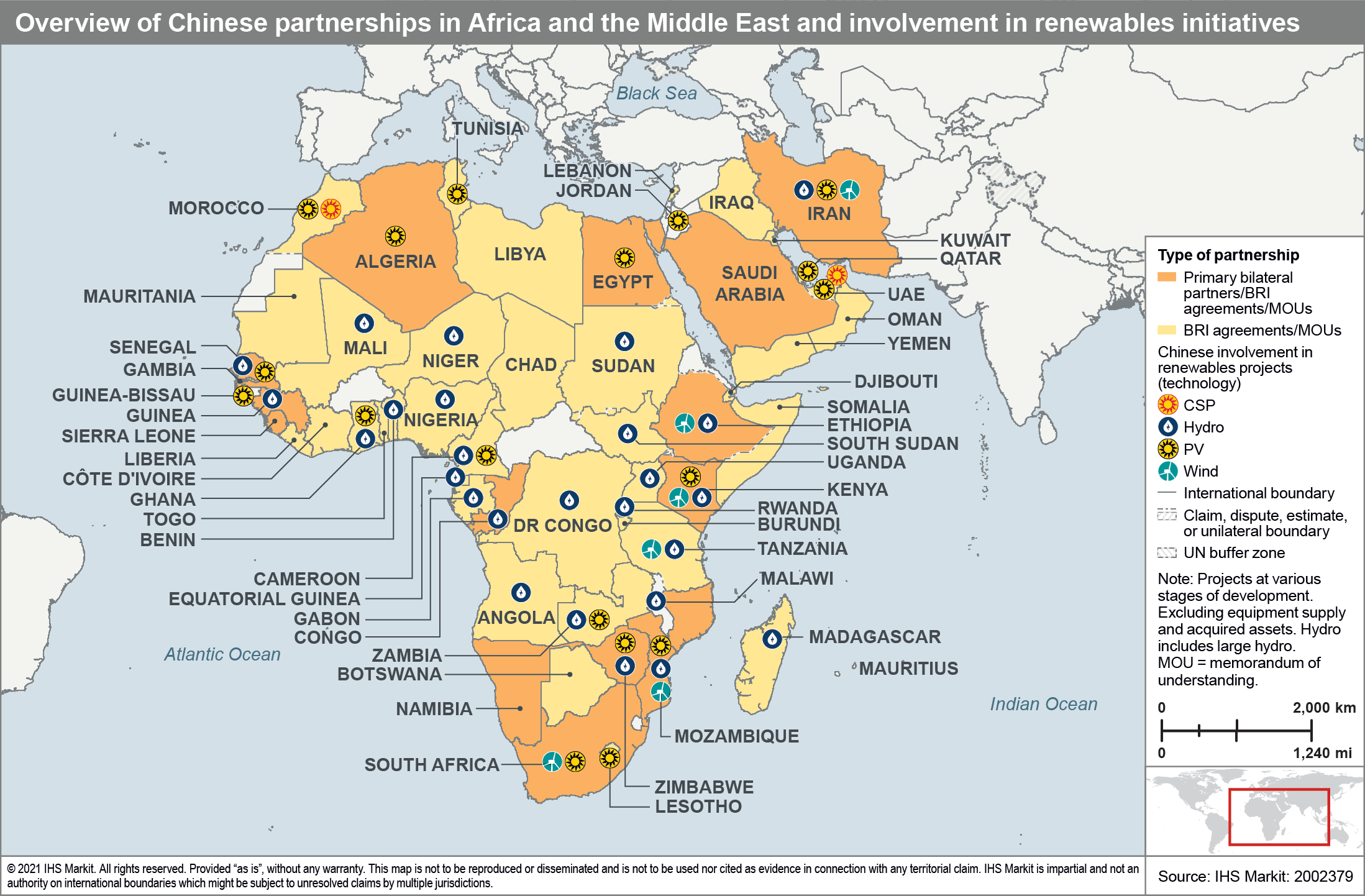
Even Hamas knows western powers don’t do this on purpose - which is why they take up arms inside of civilian facilities. The Iranian people know the US doesn’t intentionally kill little girls.
Meanwhile the Iranian government quite literally has killed upwards of 30,000 people (maybe some were little girls even) and is hanging people in the public square for protesting.
Not to mention Iran intentionally targeting apartment complexes and other civilian targets throughout the region. Why are we even talking about the US accidentally blowing up a school? We should be talking about Iran and their revolting crimes instead.
reply