It's sad that it took legislation to make this happen, but I can see why.
I worked in a pseudo-Apple-store during the height of the 30-pin dock connector and I sold so many cases, speaker docks, charging cables, and all sorts of weird accessories that were built for the 30-pin connector.
Then Apple switched to Lightning. It was better in every. single. way. And yet people got burnt. There was so much hardware that was now incompatible that people understandably didn't recognise the benefits of the Lightning connector.
This mattered far less for other companies because of the lack of brand recognition. If someone switches from one non-Apple device to another non-Apple device, they don't necessarily expect to keep using the same cables, and back in the day every manufacturer had their own. The expectations of Apple were higher only because of that brand recognition.
Sadly, the fact that so many got burnt in the Lightning transition means that there is _still_, a decade later, a resentment among many. I've spoken to so many people who don't like Apple devices, who when asked why say things like "they're always changing their cables". It's obviously not true, but to most people who aren't familiar it might as well be.
I think this even burnt the MFI manufacturers. 30-pin compatible speaker docks and other accessories were very widely available, but there are far fewer devices made for Lightning. There are other factors here like the rise of Bluetooth and Wifi enabled devices, and the demise of the iPod, but I think manufacturers also knew customers didn't want Apple specific connector hardware anymore – I know I didn't.
Ironically, the long-delayed USB-C transition has probably had the opposite effect. In attempting to compensate for the public view of Apple changing connectors, they've become somewhat known as being the company with the wrong connectors. It's sad, given Apple's core role in defining the USB-C spec, but it's understandable.
I look forward to a USB-C iPhone. It's a shame it took legislation to make it happen, but I understand why given how long customers' memories are about the 30-pin connector. As much as we'd like to think USB-C was the "right answer" several years ago, it's a bit more complicated than that.
1. As you mentioned, most accessories have moved to wireless. I still (usually) use a physical cable for charging, and I guess I have a 3.5mm dongle, but I think those are the only two things I've plugged into my iPhone in years. Docks with a physical port, in particular, were super popular 10+ years ago and don't really exist anymore. People won't be throwing away speakers.
2. They aren't switching to a new proprietary port, they're switching to a standard port. Which means there's already a thriving ecosystem of accessories that will now be usable with iPhones (some of which people may already have, for use with their other devices!)
I'm more cynical in my interpretation of Apple's motives: I think they just wanted those licensing dollars
> I'm more cynical in my interpretation of Apple's motives: I think they just wanted those licensing dollars
They've switched every other non-iPhone device to USB-C. The more plausible interpretation would be that they don't want to piss off a core constituency of customers who've built up 10 years of Lightning cables. The number of people who care about standardizing on USB-C are definitely less than the vocal folks who will now complain loudly that Apple just forced them to buy a whole bunch of expensive new cables.
At least USB-C is more durable by far than Micro USB was, even if it's not as durable as Lightning. Nothing can fix the stupidity of USB-C cables, though. What a mess.
> ”The number of people who care about standardizing on USB-C are definitely less than the vocal folks who will now complain loudly that Apple just forced them to buy a whole bunch of expensive new cables.”
I don’t think that’s true. Even hard core iPhone users likely already have multiple USB-C devices and cables, and the existing chargers are already USB (A or C) and will continue to work just fine. Apple does still include a charge cable in the iPhone box.
It’s not like the old days when people were invested into all kinds of accessories with 30-pin connectors. Most people just don’t care that much about a few Lightning cables and will be glad to rid of them.
We have 2 recentish iphones and an old c. 2016 ipad, but we have at least 10 lightning connections around the house, car, etc to plug into.
We obviously aren't going to replace all 3 devices at the same time, so it means that the first device we replace will suffer from not having the places to plug in that we currently can (sofa, kitchen, bedroom, car, office, bag, etc), or we have to get more power supplies in those areas, and over time we'll have to get another 10 cables to replace them (and usb-c cables are a total mess)
We'll adjust of course -- we were burnt when they dropped the dock connector meaning we couldn't use two of our radios any more, but we didn't make that mistake again
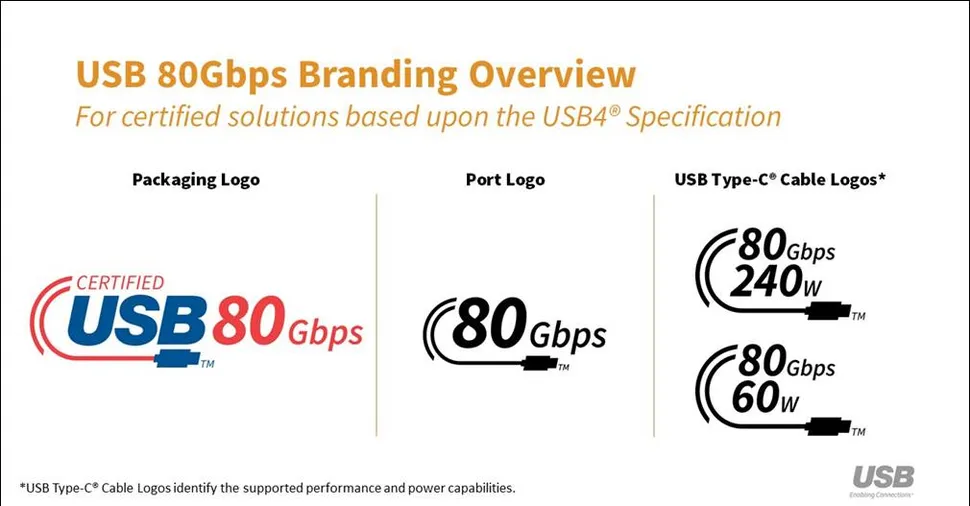
The good news is that all functional USB-C cables will generally charge at 30W. They might not be able to go above 30W, they might only have USB 2.0 speeds. The USB-IF has only just now come up with IMHO their first passable attempt at labelling.
However, for a couch or car charger for a phone, just about any cable that is wired correctly should do everything you want.
The problems come with alt modes and fast charging - the cable might not support the full capabilities, or the device itself (points idly at Nintendo Switch and Raspberry Pi 4) might not have shipped as USB-compliant, breaking with certain valid setups.
My opinion, the problem here isn't just cabling but troubleshooting help - how do I know the cable or charger I'm using isn't charging my computer at full speed? And which one is the problem?
> They've switched every other non-iPhone device to USB-C
The only device I know of that started out on lighting and switched to USB-C was the iPad, and that was specifically because they're pushing it as a "creator" device, for which people needed to be able to plug in things like flash drives, SD card adaptors, cameras, mice and keyboards, etc. There's significantly less drive for those kinds of accessories on iPhone
I think there's more drive for that than you'd expect. The camera breakout kit is really popular in my circles. Not for cameras, but for talking to USB audio interfacs.
Last week, with the new Apple TV the remote switched from Lightning to USB-C charging. That indicates that they are now in the process of transitioning accessories. It’s a pretty clear indicator of an overall shift in their plans.
People expect to be able to charge the headphones they use for their phone the same manner they charge their phone. I suspect they'll be quick to change over such accessories once they change the phone port - they have had several smaller revisions to the non-pro AirPods, such as adding support for wireless and MagSafe charging cases. We will likely just be able to buy a new case when that happens.
The real surprise is that the mice, keyboards and trackpads haven't gotten a meaningful update in a long while, so there's no USB-C on any of them. You'd think they would have long ago decided to switch those to USB-C, since the computer ships with a C charger - and because they could justify removing the bundled cables from the packaging.
> The only device I know of that started out on lighting and switched to USB-C was the iPad
The new AppleTV remote
> and that was specifically because they're pushing it as a "creator" device, for which people needed to be able to plug in things like flash drives, SD card adaptors, cameras, mice and keyboards, etc.
Apple has sold a USB to Lightning adapter for ages.
From what I'm guessing, a lot of the problems can stem from either parts that don't meet the spec because it saves some money, or sloppy QC on the solder joints. Unless I'm missing something, USB-C doesn't inherently solve problems of manufacturers picking out of specification parts or bad QC.
> Maybe? The USB specifications calls for USB Micro-B to have the same 10,000 connect/disconnect cycles as USB-C
Micro USB was such a dumpster fire. I never got within two orders of magnitude of that spec, I'm pretty sure. It's a terrible connector, easily broken.
Mini USB was terrible, and would typically fail well below 1,000 on the device side. Mobile phones might not make it through their first year with a mini usb port back in the day, depending on how many times a day someone attached it to a charger.
It was replaced with Micro USB and effectively removed from USB - but a lot of devices still shipped it because it was cheaper.
The main thing USB-C and Lightning have going for them, which Micro-B doesn't, is the redundancy of two connection pads.
I've had more than one female Lightning port start to get tetchy about which direction a cable goes in.
All I'll miss from Lightning is being able to clean the port with a toothpick. Then again, that's not a small thing. When I hear/feel a bit of grit in a USB-C port I get a sinking feeling, with Lightning I just reach for a dental pick.
You can clean out a USB-C with a toothpick too, I did mine a few months ago when the connections got flakey and I got a ton of fluff out and now cables click in (which I forgot was supposed to happen).
In short there is no way of knowing by looking at a USB-C cable or socket what it supports because there is a myriad of standards all using the same connector - USB Power Delivery, USB 2.0, 3.0, 3.1, 4.0, Thunderbolt 3, Thunderbolt 4, DisplayPort over USB
You have to usually measure to know what does the cable support and what speeds and or voltages are possible.
Unlike every other connector, with USB C the male end is in the phone and the cable is female. Since the male end has a thin piece that inserts into the cable, it both invites lint to get stuck the port and makes it somewhat risky to clean out, as snapping that thin piece requires replacing the port (and maybe the whole phone depending on how it's made).
Compare to lightning, which AFAIK is indestructible, and lint can easily be cleaned out of the phone port with a toothpick.
I'm sure people more knowledgeable than me will have other facts as well.
Did anyone ever snapped that "thin piece"? It is not that thin, and in fact, I never managed to break even the much thinner micro-USB tongue.
I have broken USB sockets, and seen broken sockets, but every time, it was either wear or the connector being torn off a PCB (they are not always mounted properly). The only times I have seen a broken tongue was with USB-A connectors (the big ones), probably from a plug being forcefully inserted the wrong way. Micro-USB doesn't have this problem because of the shape of the connector prevents it and USB-C is reversible.
USB-C is only a connector spec, and the actual USB protocol it supports could be one of many different versions and options. Or it can be Thunderbolt 3 or 4!
Mostly it's a mess of unknowns as to weather the cable you buy will actually do perform well. With USB-C cables it's all fine print and advertising.
This article is from 4 years ago and gets updated each year.
https://www.androidauthority.com/state-of-usb-c-870996/
All these are existing variations of cables with a USB-C tip: Quest link cable, thunderbolt cable, charge only, data only no video, video but not 120hz, etc. It's not like you'll have fewer cables to manage if one device changes its port to USB - C.
The biggest change will be in people's backpacks and suitcase. Now they'll have one cable instead of two(or two instead of three if they carry an apple watch). All your other devices still need their own dedicated cable. I'll still carry two cables though because sometimes I want to charge two devices simultaneously.
If you mean cables that have a USB-C tip at one end, that's true, but I could cite thousands of distinct cables that have a USB-A tip at one end.
Also "charge only" cables violate the spec, and thunderbolt-only cables violate the spec.
When the cable is USB-C at both ends, there are different speeds and that's pretty much the only thing you need to care about. Occasionally you need to check whether it's a 60 watt cable or something higher, but not often.
They are opaque. For a given use case you need to know which USB-C cable you need, and they all look just alike, but can have varying capabilities. You can't even make a do-everything cable, either.
We replaced trying to figure out which plug fits in which of the many ports we have, with trying to figure out which identical-looking cable will do what we want when we plug it into the single kind of port.
This is arguably still an improvement at least for some people, but does suck.
And just in time for MagSafe's return...the iPhone will go to USB-C! Of course, you can still charge a Mac over USB-C — it's just not as much of a unification as it seems.
If it is, then I've just had rotten luck, because every time I notice "hmm, that's toasty" it's plugged in on the left side. Absolutely no science done, to be fair.
Cool (ha!) good to know. The times I've noticed mine getting pretty toasty when charging was from the left side, so I consciously try to avoid it (apparently a sibling suggests it's Intel only, so it totally could just be selection bias on my part). Regardless, I'm glad MagSafe doesn't have that problem. Thanks!
I’m more hopeful that they’ll actually include drivers for those devices (probably not). It’d be nice to hook up a screen via hdmi instead of needing an Apple TV. Or plugging in a dock with regular mouse/keyboard attached.
USB-C iPads already support all of that, and you can already do those things today on current iPhones with an appropriate adapter -- search for "Lightning Digital AV Adapter" for an example.
I already use my laptop charger for giving the phone extra juice when I'm sitting, now my wife will be able to do the same with her iPhone. Same in the car, only one cable.
Something I found interesting when discussing this with my wife..
All my friends are tech heads and champing at the bit to have usb-c in their iPhones.
But when she asked me why people were mad about the switch to usb-c it took me by surprise. Then she showed me a lot of online responses from non technical people who see the change of port as annoying and wasteful because now all their stuff won’t work without adapters.
I think it’s really interesting to see the difference in mind sets between different demographics.
But even those non-tech people should have some USB-C cables lying around at this point
Android phones have used USB-C cables for many years. The Nintendo switch and PS5 controllers use USB-C cables. Chromebooks use USB-C cables. The alarm clock I just bought uses a USB-C cable. My keyboard uses a USB-C cable. Every MacBook made in the last five years (and most iPads sold in the last couple years) uses a USB-C cable.
It's very possible, if they're nontechnical, that they already have cables that will work with it and don't even realize it (which to be fair might be its own problem, but it's certainly a smaller problem)
We have 5 iPhones (no usb-c connectors), 5 tablets (no usb-c connectors), 1 desktop (no usb-c port), and 6 laptops (only 1 of which has a usb-c charger). So, we have a grand total of 1 usb-c cable in the house. And that one is already in use charging a laptop. I sure hope Apple is planning on including a cable and charger with future iPhones so I don’t have to purchase a separate cable.
Frankly, hardware doesn’t become as obsolete as fast anymore, so there has been little reason to purchase usb-c replacements for our non-usb-c hardware.
I have about twelve Lightning cables (2 in car, 4 permanently installed at convenient locations, a few in my work bag, an couple in another bag and some currently missing) and one USB-C cable, which I use for charging my laptop.
At some point soon, perhaps when I get a new iPhone, I am going to have to start buying more USB-C cables.
I will then spend years looking at the end of cables to see what the connector looks like. Just like USB-A and B where I had to make sure they were the right way up, which takes at least three attempts.
At some point, my iPad and iPhone - and my family’s iPads and iPhones - will all be dead, and replaced with USB-C versions.
We are quite good at hanging onto devices until they can no longer have new safe batteries (installed by Apple) or have no real use, so this could be around ten to fifteen years.
This drive by the EU seems to mainly talk about power adapters, and how it’s a waste to have separate ones, but all the power adapters I use for phone and iPad have USB-A sockets.
With USB-C on both ends of cables, I expect I’ll have to buy some new power adapters soon. I will then have to have two adapters everywhere (one for my USB-A to Lightning cables), or buy lots of USB-C to Lightning cables for the transition period. To go with the USB-C cables for post transition period.
I’m not at all inconvenienced by Lightning and not at all desperate to have USB-C, and USB-C will be replaced by USB-D in a few years, probably many years before the Lightning devices have given up, to USB-C, so I will probably carry several Lightning to USB-A, several Lightning to USB-C, several Lightning to USB-D, several USB-C to USB-C, several USB-C to USB-D and several USB-D to USB-D.
* not counting the Switch. I’m not gambling with that - it gets its original PSU only.
> With USB-C on both ends of cables, I expect I’ll have to buy some new power adapters soon. I will then have to have two adapters everywhere
Recent lightning cables already have USB-C instead of USB-A at the other end; that's not a part of the EU mandate as far as I know. In fact I'd bet USB-A would be explicitly allowed, because it's a standard port.
I'm using a power adapter that has 1 USB A and 2 USB C output. Theses new generation chargers are very small and powerful. I can charge a laptop, a phone and a ereader at the same time.
Hardest line is when the cell carrier drops support. I held onto my iPhone 5 until the very day it could no longer work as a phone, and that was also far after it stopped receiving security updates.
Or what happens is they stop running the latest OS, then newer apps you might need stop supporting old OSes. Old versions of apps might even stop working with whatever servers. That or the latest runnable OS doesn't work with whatever 2FA bs you need to download free apps from the App Store, as was the case with the iPad 2 last I tried.
> But even those non-tech people should have some USB-C cables lying around at this point
I do have a couple of these, from my old MBP and my iPad Pro. What I don't have many of are USB-C bricks. I have tons of USB-A bricks that work with all of my micro USB devices (wireless keyboard, Beats, bike lights, etc.) and my Lightning devices (iPhone, several iPads, several AirPods).
If all of these devices move over to USB-C and don't include bricks, I'll end up going out and buying half a dozen of them to replace the ones we have around our house currently. We'll also need cables, and in all this will probably cost $100. Not a huge deal, but not something I'm looking forward to shelling out for, especially since there's no gain from my perspective.
> Every MacBook made in the last five years (and most iPads sold in the last couple years) uses a USB-C cable.
Current Apple laptops come with USB-C to MagSafe cables. They are USB-C in the sense that they fit USB-C bricks, but the cable itself (which is very nice/braided, and hopefully will last a long time) is single-purpose. It won't work in anything but an Apple laptop.
Maybe this'll broaden that perspective a little: Apple devices since the iPhone 8 support USB-PD with C-to-Lightning cables now, and it's much faster. Decent USB-C chargers are a noticeable quality-of-life improvement.
I've never used one. In fact, my phone charges off a keyboard USB port so it's 0.5A and stresses the battery less. Of course not as much of an issue now that there's optimized charging.
So you're saying my iPhone will charge faster? I probably won't notice, since I only charge overnight. My phone actually pauses charging until 7 AM to manage battery health.
Also, if this is already available with USB-C to Lightning cables, is there an additional speed bump if the iPhone itself has USB-C?
I also just realized this means I'll have to buy new power banks, since the old ones are USB-A. That's another $40-60 total.
I also normally charge my phone at night, but I find the USB-PD charging super valuable when traveling, because if my phone is at 20% it will very very quickly be back up to 60% or so off of a USB-PD charger. Apple A-to-Lightning fast charging isn't slow, but it isn't that fast, and it's one more thing to think about.
You don't have to buy new power banks, either. And really, you don't have to buy new adapters either, if you don't want to! A-to-C is supported for both data and charging. iPads already fall back to Apple's old fast charging over A-to-C when your adapter or power bank supports it, I don't think there's a reason an iPhone wouldn't. It won't be as fast as USB-PD, but that upgrade's a choice.
Your concerns are definitely not nothing, but I think you're really overthinking it. It's not a step change, you can do it gradually, and when you go to USB-C on both ends, you'll get something for doing it. (USB-PD is currently available with C-to-Lightning cables, but you've said you don't have any of those right now, so I would assume it's not a big deal to you and you will realize the benefits when you upgrade.)
Sure, I also fast-charge sometimes when traveling. But I have found that USB-C is not available on planes, in airports, or in hotels. So if I want to be able to charge conveniently, I actually would rather have a USB-A to Lightning cable.
But regardless, it sounds like there is no additional speed advantage to having USB-C to USB-C versus the currently available USB-C to Lightning. Is that right? As for getting a bunch of dongles, that's one solution, but means spending more money.
But even those non-tech people should have some USB-C cables lying around at this point
Dont most people keep some devices permanently connected to the cable it came with though? I don't use my monitors USB-C cable to charge anything else. I don't use the quest link cable for anything but the quest. In theory it's "one cable for every device" but in practice the only place that happens is in a backpack power bank or car. Every device comes with its own cable and whether the new iPhone comes with a USB or lightning cable all it does is add one more cable to your collection.
If they do have a usb-c cable they likely don’t necessarily think of it as one. It’s just generic charging cable that works with this device that they probably leave plugged in all the time.
But when you tell them that the thing they plug in and out every day is changing cables that ruffles feathers.
I have a FLIR camera that plugs into the lightning port on my iPhone. I'm not sure if it will even be supported with an adaptor when/if I get a USB-C iPhone.
USB-C appeals to techies, people with an engineering mindset, because it's an elegant solution. It's one connector, with graceful handling of different use-cases from charging, through peripherals, to high-speed high throughput data transfer.
But practically speaking, I've bought several HDMI adapters, had a hard time choosing a mouse that had USB-C a few years ago, have bought a new charger, lost MagSafe on my laptop. This is how most people view it, and it's hard to convince them otherwise, and rightly so!
There are some technical pitfalls of USB-C too. Solvable but still present.
Probably the biggest thing people don't think about is how rare USB-C hubs are. I don't mean the ones that adapt to other ports (if you thought of that first, it illustrates my point), I mean one that takes one USB-C and gives you more. For years after 2016, the chip to make this simply didn't exist. Even now, it's expensive. For this reason, it actually makes sense to use USB-A accessories even if your PCs take -C, cause you can always get more -A ports for cheap. So companies still make -A accessories, and even a lot of -C ones tend to come with an A-to-C cable in the box (and no -C to -C cable!).
Non-tech people tend to understand these things without knowing it. They see new port, they say no.
I have had Android phones where the USB-C port has failed bricking the device (can’t charge). Micro-USB was far worse, but USB-C still fails to often.
Lightning appears to be much more robust (anecdotally watching friends devices, I have had few Apple iDevices). Mechanically and electrically, I like the lightning connector (although I loath proprietary shit generally).
Having one port profile front for multiple technologies (USB, USB-PD, DisplayPort, Thunderbolt), and multiple versions of those technologies, with the cables being random able/unable to support any particular matrix of them, has been a usability nightmare.
Also on a purely functional level the actually-a-male design of the Lightning plug has made it—in my opinion—a far superior physical plug than the looks-male-but-is-female-in-disguise design of the USB-C plug.
I know many people that mentally only perceive connectors as "the iphone cable" and "the android cable". The "Android cable" could be anything from micro-usb to usb-c to old propietary connectors of old nokia and motorola.
To this people this change effectively removes what's familiar and understood for something unknown, but I think it will still be for the better if eventually they will only perceive it as "the cable" that just works with pretty much anything.
Those "non technical people" want the same thing that the "tech heads" want: One type of cable that is compatible with all their devices. They just don't necessarily realize that they have already organized their lives in a way that excludes mismatched cables.
I would be just as happy to have everything switch to lightning. I really don't care what it is I just want all my cables to be the same.
One time my mother ordered a power cable for an old coffee maker, I think a Revereware percolator or something similar. I remember she found one specifically for it and waited for it to arrive so she could test this and re-sell it. I took a look and it's just a regular ATX computer power cable (type C13 but I had to look that up), and I was like, I've got a pile of those and could just have given you one.
People just don't realize what are standard cables vs what are bespoke for their application, and this sort of thinking has bitten me personally as well.
As someone in the Apple ecosystem looking out, I disliked that the 30-pin connector replaced FireWire, but understood it was thinner. That connector then stuck around for around 10 years.
Look at nearly every other device manufacturer when the 30-pin connector was being used - Palm, Motorola, Samsung, LG, Sony, etc. all used proprietary connectors that were not only incompatible with each other, but often didn’t work between devices from the same manufacturer. There was no devices to replace (except chargers), because no accessory makers would take the risk of 30 SKUs to support devices that wouldn’t be sold in 6 months and whose bespoke connectors would vanish with the device.
Late in that evolution, device makers decide to standardize on micro-USB, but even that “standard” didn’t last as long as the 30-pin connector.
Lightning was almost universally better (unless you wanted audio and power easily from the same connector), and it also lasted for around 10 years.
USB-C hasn’t even been around as long as lightning, so even though most devices have standardized on it, it has a shorter product life than Lightning has had. Even now, it’s still a mystery to me whether a USB-C adapter and cable will charge my device or fry it.
I’m hopeful that USB-C and whatever charging standard du jour sticks around for a while. The physical connector seems robust enough (though Lightning’s single metal block with no flimsy plastic blade seems pretty optimal), and small enough (again, Lightning).
The idea, however, that Apple is always changing cables when they’ve had two (2!) over two decades is an amazing feat. It’s suboptimal that they were proprietary, but the idea that there is a mountain of e-waste because of them ignores how long they were compatible and the effect of their ubiquity had on accessory makers.
I welcome a new USB-C world, but really think the issues with the 30-pin and Lightning cables ignore everyone else in the industry. I’m also concerned that when USB-D is released, will this legislation prevent device makers from adopting it for stupid legal reasons. This seems specifically like something that should be left to markets.
I think this meme started due to Nintendo (very inadvisedly) adopting a non-standard USB-C implementation for the Switch. It wouldn't have been nearly as bad if they'd used a proprietary connector on top of their modified implementation, but they left the connector unchanged and simply added a "use only official Nintendo chargers" warning which of course no one was going to follow.
This did then, in fact, predictably lead to people frying their Switches, and has only further muddied the waters around the standard (which, to be sure, if you're using chargers and cables from at least minimally reputable manufacturers, will never fry a device under normal circumstances).
Wasn't that meme only due to one third-party docking station putting 12V on the data lines? I never heard any stories about regular USB-chargers or USB-C cables frying the Switch.
is it still a problem?? recently bought a switch and only plugged to the official adapter that came with it, but my first thought was “too bulky” so was wondering if I can use my M1 air USB C charger on the go instead.
I've certainly charged my Switch with the charger and cable that came with my 2018 MacBook Pro, and it never caused an issue. Nor is the Switch in question of particularly new vintage (it's closing in on three years old now).
> To oversimplify things quite a bit: The Switch uses a M92T36M Power Delivery (PD) chip, which isn't quite like anything else on the market. The chip can tolerate six volts of power — and that's it. Docks like Nyko's can provide up to 9V of power, meaning it's only a matter of time until the chip burns out.
I've charged the switch with the charger that came with my Samsung phone. I have the impression charging the dock with a third party charger may be more dangerous than the device itself.
It's not astonishing that not following the spec can lead to things getting fried, though? Splice a mains jack onto a USB cable and you'll see some smoke too ;)
But I agree that the level of incorrect implementation was shockingly high initially. Luckily it's much better now!
Looks like the Etherkiller[1] needs updating for modern times. I wouldn't be surprised if usb -> serial plus the serial etherkiller would do the trick though.
OTOH, USB Killers do exist, but they only kill hosts; Mains -> USB-C could kill hosts and targets indiscriminately.
I suspect that Apple has been in progress of moving things over to USB-C for a while (see the recent Apple TV and iPad changes). They have already moved off of USB-A chargers completely, moving onto USB-C chargers.
My understanding is they are also pushing the upper limits of what lightning charging cables are rated for, my suspicion is that it can't support PPS, so the lightning port is now limiting them both in charging speed/flexibility and in data transfer.
But in some markets (like the US) you have more lightning-charged iPhones than android phones. It is a lot big cost for their customers to bear, throwing away a decade of chargers and cables when Apple is not really going to be able to express it as an improvement to them - for instance, most phone users don't use the data channel at all, getting updates and backing up data with the cloud.
I find it odd people think their reluctance has been to defend profits on some sort of lightning cable ecosystem. Their margin on phones is likely $100+. Their margin on the licensing for a third-party cable is likely below $0.50.
I'd argue this regulation is great for Apple, because it gives them a scapegoat. Apple then claims didn't necessarily _want_ to cost their customers a bunch of money, but the EU mandated it. So Apple is going to go ahead and make the change worldwide.
But hey, look, at the same time we improved phone charging speeds and look how fast we can transfer ProRes media you captured with your phone now to your computer? Feel free to tack those new official charging cables and data transfer cables along with any chargers you need at purchase, if you don't have any already.
> Apple switched to Lightning. It was better in every. single. way.
This is pedantic, but the 30-pin connector did have one minor feature Lightning didn't -- the interface supported a design where it needed to be squeezed to be released, like DisplayPort or RJ45, and a small number of products took advantage of this to build very secure mounts. When switching to Lightning it was no longer possible to build a 3rd-party accessory that had such a secure attachment to the phone.
EDIT2: that page has a comment "This cable came with my Ipod Touch and all i have to say is , what an improvement. it was a wonderful idea to do away with those silly squeese tabs. all i have to do is give it a quick yank and its out." so maybe I'm not imagining things?
There were two different models I believe, one that had the squeeze grip and another that didn't require it.
I believe the design was changed because the original squeeze cable had a tendency to cause damage to the iPod/iPhone/iPad when inserted and then yanked/pulled out without squeezing. At least, that's what I remember.
I stayed at a hotel in Italy a few years ago, and the radio alarm next to the bed _still_ had the 30 pin connector. No doubt that there are probably a ton of people still annoyed at Apple.
Yep, Apple probably wanted to switch to USB-C earlier but you can see why they also wouldn't want the backlash. Now, they can switch to USB-C and also blame the regulators when people are mad, so this is kind of win/win for them.
What makes you think they wanted to switch sooner? I get that this gives them cover, but what competitive/cost benefits would they have gained by switching?
> competitive/cost benefits would they have gained by switching?
It would make the rest of their customers happy -- the ones that do want one standard cable. I mean, it's their only computing device that they haven't switched to USB-C yet.
My family is all Apple, and we have precisely one device that charges USB-C to USB-C: an iPad Pro. Everything else is Lightning (4 iPhones, 3 AirPods, 3 iPads), MagSafe (2 MBA/Ps), or micro USB (Beats, wireless keyboard, bike lights). I'm not dreading the transition, but I'm definitely not looking forward to it. If I were 20 years old and just starting to accumulate devices/chargers, I'd probably be more in favor of it. But after a decade-ish of collecting Lightning chargers/cables, I'm not at all eager for the iPhone to become USB-C.
Ya, for sure. We've got a very similar device lineup to yours. Apple got a lot of backlash last time and I'm sure there will be a lot of upset people this time too. But, there's also a group of people looking forward to the change.
You're skipping how Apple made Lightning a closed standard and charged big royalties for it. I can reasonably point to that licensing as the reason a legitimate Lightning to USB cable costs at least $15 instead of $1.50, cause the latter is how much a good knockoff costs.
Seriously. I will not take anyone seriously about how "Apple just cared about a better standard" when they literally don't allow it to be made a standard.
It's just a connector. If you're not letting everyone use it, it's not about it being better... it's about rent-seeking. Which is exactly what the EU legislation seeks to end.
Not to shill for a trillion dollar megacorp, but when you've got lightning and the competition has USB mini, how exactly is that rent seeking? You've developed an objectively better product, don't you deserve something for it?
Because it's required to use the product, right? Like, if you have a phone, and you can buy a lightning version or a quarter-inch audio version, sure, yes let the free market win. Nope... they removed the audio jack (against large public outcry).
This isn't about lightning being better, because we were never offered a choice. Lightning being the only option when there is a clear market for alternatives is the obvious tell for rent seeking.
It was in fact much better for several years, and it probably inspired USB-C. At some point it wasn't, and they kept making excuses to keep it anyway. I don't agree with the EU law btw, just saying Apple wasn't keeping Lightning for actual usability reasons in the end.
If you can find a $5 one that's truly MFi-licensed and not a counterfeit, that's a new thing. They used to always be $15 minimum. Not talking about luxury ones.
You care when it stops working one day because Apple changed something (maybe intentionally). Out of a combination of spite and cheapness, I've only ever bought unlicensed cables for several years, and this is the price I've paid over time.
So how well are the USB C cables going to work that follow the minimum “mandate” that doesn’t require cables to support data at all? How well are they going to work when people pick up a “USB C” cable and wonder why they aren’t seeing video when they connect their phone to their TV?
Not very well, but you can buy decent cables from a variety of manufacturers for cheap, and there isn't this one license-holder (Apple) out there trying to take a big cut from that. If someone wants to make a good Lightning cable for cheap, first they have to break the law by skipping the licensing deal, then they have to get around Apple's own mechanisms.
It doesn’t prevent “ewaste” if phone makers (mostly low end Android phone makers) still bundle shoddy cables, stores are still allowed to sell shoddy cables, etc.
A “good” USB C cable that supports all of the things I said - high speed data, video over USB, etc - costs around $15. The same price as an Anker Lightning cable.
A random USB C cable doesn’t support video over USB - something I need for my portable secondary display.
The iPads with USB C already support this. I have no reason to believe that the next iPhone won’t.
> A “good” USB C cable that supports all of the things I said - high speed data, video over USB, etc - costs around $15. The same price as an Anker Lightning cable.
But the Lightning cable won't support high speed data. And if you want video over Lightning you can't just use a cable, you need an adapter with an embedded computer to decompress the output.
A USB C cable that has the same capabilities as that Lightning cable is 2-3 dollars.
The EU is suppose to be mandating a “standard”. What good is a “standard” that doesn’t support the “standard”?
USB C cables that come with the iPad supports all of those standards. What are the chances that unsuspecting users in the EU dancing in the streets go in an buy a “standard USB C” and find out that it doesn’t work when they get ready to plug their phone to the TVs or when they find out the promise of “USB3 speeds” because it was the “standard” is a lie because the EU didn’t mandate that as part of the standard?
> The purported goal is to “prevent ewaste”. How does it prevent ewaste if you still can’t depend on the cords working the way they should?
For charging, it's fine.
> Is that the bar we set now? It’s no better than what came before?
A charging standard shouldn't care about data except to avoid getting in the way, and it probably shouldn't mandate more expensive cables for devices that don't have data.
Also USB C supports more power than lightning.
But to directly answer: That bar is just fine, because the point is the make everyone use the same thing. It doesn't need to be better, it needs to be good and everyone the same.
People just want to charge their phones. Maybe if someone actually cares about USB3 transfer speeds, they'll go buy the slightly more expensive cable for that. It's not like TVs even have USB-C.
And I don't think this reduces ewaste. It's about the same.
What wattage, enough to charge my phone. What speed, don't really care but it's at least the same as Lightning. Video, never used it.
EU wanted to break up Apple's proprietary control over the iPhone ports and create a charging standard, cause charging is the important part. Anyone can make a higher-spec USB-C cable without going to Apple, and chargers are uniform for all phones.
Worth repeating that I don't agree with the EU's law, just saying why they did it. Nobody in this thread has brought up the real con, which is that tech regulation hinders innovation, and the minor frustration with chargers wasn't a big enough problem to warrant that.
You're actually right about the video -C cables. That feature costs extra, and I didn't notice the first time. But it's rare to need one, and they'll get cheaper over time.
That 3-pack MFi Lightning for $10 is a new phenomenon. It was never like that before. I can believe it's not fake, just cheap cause it's old tech and on its way out.
> So how well are the USB C cables going to work that follow the minimum “mandate” that doesn’t require cables to support data at all?
Citation needed? I think those are below the minimum.
> How well are they going to work when people pick up a “USB C” cable and wonder why they aren’t seeing video when they connect their phone to their TV?
They probably feel similar to people with lightning cables.
Lightning doesn't support video over mere cables. You need a complicated adapter that decompresses the video sent by the device. It's like a tiny streaming setup.
If you just pick up a generic lightning cable, you're not getting video.
Yeah, Lightning doesn't run HDMI or DP over it. I think Lightning still has some kind of video protocol for those adapters to work. USB (non-C) to HDMI requires special software on the host.
And they all require data wires. The minimum speed is the same speed as Lightning. And the minimum wattage is higher than Lightning as far as I am aware.
They definitely don’t. The USB C cord that came with the previous MacBook Pros were power only as are a lot of other USB C cables especially ones that come with headphones.
The maximum wattage of the little USB C cable that comes with headphones certainly don’t support a minimum wattage that will charge a large iPhone at any appreciable speed.
> The USB C cord that came with the previous MacBook Pros were power only
Which ones? The posts I can find say they do USB 2.0
> a lot of other USB C cables especially ones that come with headphones.
> The maximum wattage of the little USB C cable that comes with headphones certainly don’t support a minimum wattage that will charge a large iPhone at any appreciable speed.
Those cables don't meet the standard, then. The minimum is 3 amps and a single pair of data wires. And that doesn't require much, especially for a little 6 inch cable.
It mandates a USB C connector. They weren’t smart enough to mandate that “all USB C cables sold in the EU must actually meet the standard”.
Then you also have the opposite problem. If the USB cable supports higher wattage power delivery, some low wattage USB C devices like headphones won’t charge.
> It mandates a USB C connector. They weren’t smart enough to mandate that “all USB C cables sold in the EU must actually meet the standard”.
Then I don't know why you're spending so many posts purely about cables in complaint of this law. Cables have gone from unregulated to unregulated.
If your underlying argument is "this is in the right direction but they should have gone further", you are not coming across that way with all your other posts.
> Then you also have the opposite problem. If the USB cable supports higher wattage power delivery, some low wattage USB C devices like headphones won’t charge.
Do you mean like the thing with raspberry pis? That wasn't about wattage, their miswiring meant that any cable with a tag would fail.
Otherwise I don't see how that kind of failure is possible.
> The expectations of Apple were higher only because of that brand recognition.
I think the expectations were high also because Apple had a really strong marketing push on the concept of "docking" your devices. I remember even cars had dedicated iPhones docks as additional selling points, along with speakers and many other devices. There was a promise that if you bought an iPhone you could dock it everywhere and so there was this big ecosystem of things you could plug it in. Then apple switched to lightning and quietly retired the whole docking thing.
My resentment with the change from the dock connector to lightning was that with lightning, at least initially, they refused to license the tech to anyone for a reasonable fee so it completely eliminated entire classes of products from the market for newer iPhones. I specifically kept my iPhone 4S longer than I would have otherwise to be able to continue using an external DAC and amplifier for driving high impedance headphones for this reason, as an example. I had no problem with the lightning form factor, I had a problem with the unnecessary and punitive DRM they included within it for /no reason/ other than their greed. I believe it's for this same reason they've resisted offering USB-C, which would mean anyone could make an accessory by abiding by industry standards without having to pay for an mFI chip and certification.
I stayed in a hotel recently with one of those clock radios with the 30-pin connector on top. It would have been nice to have it use the larger speakers for background music and the alarm. But with over 200 rooms they probably weren't in a rush to replace all those units with Lightning and now USB-C.
I have yet to find a hotel that has upgraded their lamp-mounted or bedside USB ports. This is super annoying because I typically travel with a MagSafe charger for my MBA and a USB-C to Lightning cable to charge my iPhone. I would plug in my phone next to the bed if I could, but typically end up just leaving it with my computer to charge there.
Has anyone seen a USB-C port in a hotel? I've seen that some car manufacturers are including them (sometimes in lieu of USB-A; sometimes in addition to it).
I don't travel as much as I used to, but I was commenting on this in a hotel room in Schenectady just this past weekend. We've just barely gotten to the point where it's a surprise not to find at least one or two USB-A ports in a room, whether built into a lamp or otherwise. USB-C is probably going to take as long to appear as those did, and that was what? Five years? More? Certainly not less.
I have a compact four-port charger that lives in my travel bag, and I suspect I'll be plugging it into still-too-rare AC outlets in hotel rooms for a long time yet. At least I know it's wired correctly, has overcurrent protection etc., and will charge my devices at a known rate. Can't say any of those things about a random port built into a lamp, so I don't really trust those anyway TBH.
I‘ve seen a few, not many. I think the Mariott Marquis in New York had them and I just came back from the Hilton La Defense in Paris that had them as well, at least in the recently renovated room we stayed in.
It‘s like cars and airplanes. The change is happening it will take a long time for the existing investment to age out.
> "they're always changing their cables". It's obviously not true,
Last year Apple switched from USB-C charging to a new MagSafe charger on M1 Macbooks. USB-C was first introduced in 2018, moving away from the old MagSafe design. These are a very recent changes, so I'd say this still applies.
USB-C was 2016 but yeah. 2006 to 2022, the changes were MagSafe 1 -> MagSafe 2 -> USB-C -> MagSafe 3. That's enough changing that every new laptop you bought probably had a different way of charging, and the MagSafes were hardly different from each other.
But the alternative was you got a Dell/whatever laptop with some one-off charging mechanism.
I do quite like the usability of lightning, and I was quite upset when they cut it. I tried using 3rd party USB-C magnetic adapters, but they mostly suck. I welcome the dualism of new lightning + USB-C charging, the best of both worlds.
My MacBooks would like a word. The Magsave cable changes every few years, regardless of outside forces. None of the ‘older’ ones fit my newer MacBooks…
There have been three versions of MagSafe (not "Magsave"). The first one was in use for 6 years, the second for 6 years before it was dropped for USB-C. The third version has been around for two years worth of devices now.
Are you proposing the alternative was that Apple kept supporting 30 pin connectors?
And despite your anecdotes, evidence shows that switching didn’t hurt Apple sales. What were the people who were “burnt” by Apple abandoning 30 pin connectors going to do? Switch to Android and still have to switch cables?
Not at all. It was an old connector that needed to be replaced. What I'm suggesting is that as a brand with that level of public recognition there is No Good Answer. Every option sucks in some way.
And the same is true again now for USB-C, "just switch to USB-C" is not an answer that sounds good for most people, and Apple is still paying for the bad will from customers from the 30-pin connector transition. The USB-C transition is only going to add to that.
For us old Apple enthusiasts there were many many upsides to apples success and mainstreaming, some of the downsides include the hysterical reaction to anything they do.
Try asking the same enthusiasts who are adamant that switching to USB-C is no big deal and legacy cruft needs to be eliminated what they think about switching to a new PCIe power connector.
Forget the 12VHPWR problems, we had a push for a new connector last gen too and it was universally reviled for some reason. People do not want a new connector, let alone a new voltage rail to help move that power a little more safely, they just wanna keep doing 8-pin forever even when it swells to 4+ connectors and starts dictating PCB layouts etc.
If people want to be evenhanded and honest about seriously looking at legacy standards, it's time to have a chat about ATX and PCIe add-in-card form factorand their relevance in the 21st century. It's time for a new connector and new voltage rails and new form factors for GPUs in general, that standard dates back to the original AT PC (ATX is literally "AT eXtended") and a PC no longer looks anything like it did in 1980.
The "add-in-card" is now pulling more than the actual CPU and the growth of the coolers makes supporting them physically difficult, and the chaos in the market has made solutions impossible because there is no standard for physical dimensions or connector plug-points etc. This is textbook, it's the exact same situation as pre-USB connector standards, everyone is doing their own sizes and layouts and it's chaos. Why should we not have government intervention to impose some common standards and get everybody on the same page so solutions can be engineered and we move forward? Why should a GPU not be a 6x4x12 inch box (or a set of other standard sizes) that slides as a module into the case with high-current connectors in a standardized location? No more GPU sag, no more 4x8pin, just one XT90 jag that contacts as you slide the module into its receptacle on a rail. Sounds like heaven to me.
EU should look at giving a standards body a mandate to move forward past that and we can work towards mandatory adoption of the new standard and outlawing the sale of legacy ATX within 5-10 years. That sounds extreme but it's what we did for USB-C, right? But it's different when it's your sacred cow and you have to pay for new hardware...
> The contrast between "force Apple to stop adhering to legacy standards, USB-C is the future!!!" and "gubmint hands off muh 8-pin aux connectors!!!" is interesting.
Both of these are the same stance to me, "existing industry standards appear to suffice, why foist something different on the market?"
I don't think governments are behind a lot of these changes so that last bit is probably exaggeration but seems misplaced; it's Nvidia, Apple, etc choosing these connectors for their products.
reminder: lightning came first, because the industry couldn't get its shit together and agree on a successor to micro-b, despite acknowledgement of the shortcomings.
lightning is the pcie 8-pin in this comparison: you may not like the technical limitations it imposes, but, it works well enough that you can build products around it. So why impose a change to The Current Thing and do this whole big changeover if it's already working well enough?
could it be better? sure. And you could do better than pcie 8-pin too. But that's the hardware that's in people's hands right now.
> I don't think governments are behind a lot of these changes
sure they are, what do you think this article is literally about? The EU handed a technological monopoly via legislative fiat to the USB-IF here. You don't have to follow it, but you can't sell your goods in the EU if you don't.
Why could we not require DIY parts sold in the EU to adhere to a new "pcie module" standard and outlaw sale of legacy form-factors outside enterprise/specialty use-cases (like engineered HPC systems and other enterprise, non-consumer products)? Most of those guys are on their own mezzanine standards anyway for the important stuff. Just declare "we're gonna make the change" and give companies a few years to implement it and get hardware into consumer hands, and then flip the switch and ban sale of the legacy products. It's not a big deal to update if you actually get buy-in from companies, but you can't have half the industry go one way and half the industry go another, because then it's a mess, and in the meantime if you have half the companies digging in their heels nothing changes. Just like USB connectors.
The really ironic thing is that if PCIe could make the same transition as USB - towards 48V power delivery - it would all be a lot easier and safer. USB is literally the model for moving forward here lol, and if you upgrade your PSU you could even keep your legacy connector (48v lets you deliver 4x the power at the same current). But people aren't interested in moving forward for the sake of moving forward - the interest in ditching legacy standards vanishes as soon as you bring up a standard their brand favors.
It's just an extension of the brand wars. It's not about USB-C vs Lightning, you could simply mandate adoption of the power delivery standards and usb 3.0 speeds (ipad pro already supports usb-3.0 over lightning) if you wanted. It's about Android vs Apple and people are only interested in ditching legacy standards when it can be tied to their brand war. People absolutely don't care about the connector, and it's not about what came first (which was Lightning). They care about The Other Guy getting a thumb in their eye and having the EU legally outlaw the Apple standard. The thrill of having the EU legislatively confirm that Android Is Better.
And ATX vs future-power is turning into a proxy war for AMD vs NVIDIA too. It's mildly disgusting, like sure I'd love to move forward on eliminating legacy standards cruft, but if you want to talk sacred cows then ATX/pcie-add-in-card are #1 and #2 on the list. People aren't raising the "legacy standard" thing in good faith at all, it's just brand warriorism and the instant you ask them to change their crufty legacy standard the answer is no.
Brands are now competing and marketing to customers on the basis of refusing to adopt the new standard despite its official adoption into ATX - that's so obviously problematic that it invites the same kind of governmental action as the EU took with USB. This is how you're supposed to do it according to the USB model and industry-consensus model that the EU favors. But oh, this is my brand and my sacred cow, you can't make me change a cable, that's not fair! And literally it's the most mild possible change, ATX working group is bending over backwards to maintain PSU compatibility and it's causing problems with heating/connection quality/damage. Really we need to move up to 48V like USB did, but enthusiasts are going to pitch an even bigger hissy fit over that.
> lightning is the pcie 8-pin in this comparison: you may not like the technical limitations it imposes, but, it works well enough that you can build products around it. So why impose a change to The Current Thing and do this whole big changeover if it's already working well enough?
That would be valid if everyone was using it.
If all phones had lightning I would be much less inclined to make them change it.
> But that's the hardware that's in people's hands right now.
The hardware that's in people's hands right now is overwhelmingly USB C. That's why the motivation exists to get Apple to be compatible.
> 48V power delivery - it would all be a lot easier and safer
I don't know, that's getting pretty high. Do you then convert directly from 48v to 1.1v or do you need to add a second conversion stage onto GPUs?
Proprietary anything is bad. Apple is bad because it uses proprietary hardware. There is no "Apple standard." There isn't a "brand war" either. USB isn't a "brand," it's an industry consortium that designs connectors that anyone can use. Apple is bad and it should feel bad.
DisplayPort is a standard too. So is HDMI. They're not USB-IF standards, but they're a standard. And there can exist more than one organization promulgating standards in an area, sometimes even (gasp!) private, closed, for-profit ones (like HDMI). Like HDMI is so closed and proprietary you can't even implement HDMI 2.1 on linux lol, it's still a standard.
If you want to make a HDMI cable, or have HDMI on your device, step 1 is opening up your checkbook and writing a big fat check to the single, private, for-profit company who controls that standard. Just like Belkin, OWC, Sonnet, etc all license Lightning from Apple. Still a standard, even if you don't like the licensing terms.
Also, post on your main, you coward. Like did you literally spin up a throwaway to post edgy one-liners about fucking USB lmao
"A de facto standard is a custom or convention that has achieved a dominant position by public acceptance or market forces"
I think we were using the word standard to mean something different here, I apologize.
Going back to your argument, the reasons I typically see push for USB-C connectors are generally not technical and more about USB-C being _the_ standard connector and cutting down on e-waste.
like HDMI doesn't have DRM, or onerous licensing controlled by a singular, for-profit entity?
oh right "Apple bad, barely even a standard!!!"
Sorry if it sounds frustrated but this just isn't a very interesting tangent, either you or the throwaway coward. It's still a standard even if you don't like the licensing terms or the feature set/implementation/etc. Stop being pedantic, it's not interesting, it's not even technically correct, it's just tedious.
Terminal HN brain in action.
Anyway: much like HDMI, the licensing dollars of hundreds of companies and the worldwide adoption % says that it is a standard, even if a for-profit entity controls it, and even if you don't like the features/licensing. If you're going to be pedantic and tedious, at least be correct, nothing in Webster ever mentions that a standard has to be controlled by an industry body or names USB-IF specifically.
Again though, this is a ridiculous tangent that people are doing to avoid actually addressing the core point about the obvious parallels between USB-C and a new ATX power connector.
Closed "standards" are bad, but in this case even if it were an open standard the industry was forced to chose one of them so every device can use same cables and peripherals. It is not EU fault that the industry except Apple chose USB and is not EU fault that Apple decided to use USB in US.
We're moving away from proprietary "standards" more and more every year, weather Apple likes it or not. If Apple wanted a different outcome, it should have made lightning an open standard an gifted it to USB-IF.
As are their AirPods (unfortunately). I just bought the new AirPods Pro and will attempt to keep them for a while if I can prevent my golden retriever from eating them this time, so it seems I'll have to keep some lightning cables around.
Last year was the first time I've ever had a Mac product and I really liked it. It was also time for me to get a new phone. The only thing that stopped me from getting the iphone was their connector wasn't USBC. Seems trivial, but for someone brand new to the Apple ecosystem, it provided enough friction and cost them a sale. I might give them a shot a few years from now when it's time to replace my phone.
> t's sad that it took legislation to make this happen
Every time this topic comes up i still don’t understand what problem is this legislation supposed to solve. We’re not talking about infrastructure standarization like a gas pump, an electrical outlet or a lightbulb (which has hundreds of standards BTW) but a simple cable. Are we making laws just to accommodate consumer’s convenience now?
> 30-pin compatible speaker docks and other accessories were very widely available, but there are far fewer devices made for Lightning
Apple used Firewire in the original iPod, then used the 30-pin connector for ~10 years, following it with Lightning as the "connector for the next decade." Seems to have been fairly accurate.
If resentment from rendering existing accessories obsolete due to changing connectors is the root cause of the delay, maybe Apple has been secretly waiting for the EU legislation so it can deflect the blame? e.g. "it's EU forcing our hands so we have to change."
I think this is exactly what is going on. The last change saw a few long threads here decrying Apple as the AntiChrist for daring to make the change, and arguing for Micro USB, which was and remains a bad standard.


I worked in a pseudo-Apple-store during the height of the 30-pin dock connector and I sold so many cases, speaker docks, charging cables, and all sorts of weird accessories that were built for the 30-pin connector.
Then Apple switched to Lightning. It was better in every. single. way. And yet people got burnt. There was so much hardware that was now incompatible that people understandably didn't recognise the benefits of the Lightning connector.
This mattered far less for other companies because of the lack of brand recognition. If someone switches from one non-Apple device to another non-Apple device, they don't necessarily expect to keep using the same cables, and back in the day every manufacturer had their own. The expectations of Apple were higher only because of that brand recognition.
Sadly, the fact that so many got burnt in the Lightning transition means that there is _still_, a decade later, a resentment among many. I've spoken to so many people who don't like Apple devices, who when asked why say things like "they're always changing their cables". It's obviously not true, but to most people who aren't familiar it might as well be.
I think this even burnt the MFI manufacturers. 30-pin compatible speaker docks and other accessories were very widely available, but there are far fewer devices made for Lightning. There are other factors here like the rise of Bluetooth and Wifi enabled devices, and the demise of the iPod, but I think manufacturers also knew customers didn't want Apple specific connector hardware anymore – I know I didn't.
Ironically, the long-delayed USB-C transition has probably had the opposite effect. In attempting to compensate for the public view of Apple changing connectors, they've become somewhat known as being the company with the wrong connectors. It's sad, given Apple's core role in defining the USB-C spec, but it's understandable.
I look forward to a USB-C iPhone. It's a shame it took legislation to make it happen, but I understand why given how long customers' memories are about the 30-pin connector. As much as we'd like to think USB-C was the "right answer" several years ago, it's a bit more complicated than that.