Road ecology is a very interesting and important field, particularly the modeling of animal interactions with road crossings - all very interesting and important.
The rhetorical title is absurd, however, and I'd argue even Ben Goldfarb would agree with that.
Habitat loss is the single largest driver of biodiversity loss, as a result of many, many drivers. You've heard of all of them. The presence and proliferation of roads is, of course, one of those drivers.
I'm just not that compelled by that argument. If cars are at the center, then so are a hundred other things that are impacting biodiversity at least as much.
I'm really not trying to be a car stan here, I don't really care about cars. But focusing on cars is kindof a dumb distraction, in my opinion.
It's not so much cars themselves as it is car-centric development that causes many problems.
In the US at least, this is pretty clear: when you design new areas and cities around cars as the primary or even only way to get around, this hurts the environment a lot more than denser, multi-modal style of developments. It results in more total space needed per person, and it results in higher energy expenditures.
> It's not so much cars themselves as it is car-centric development that causes many problems.
I wouldn't call it car centric, more like everyone-gets-to-have-a-lawn-and-2000-sq-ft-home centric.
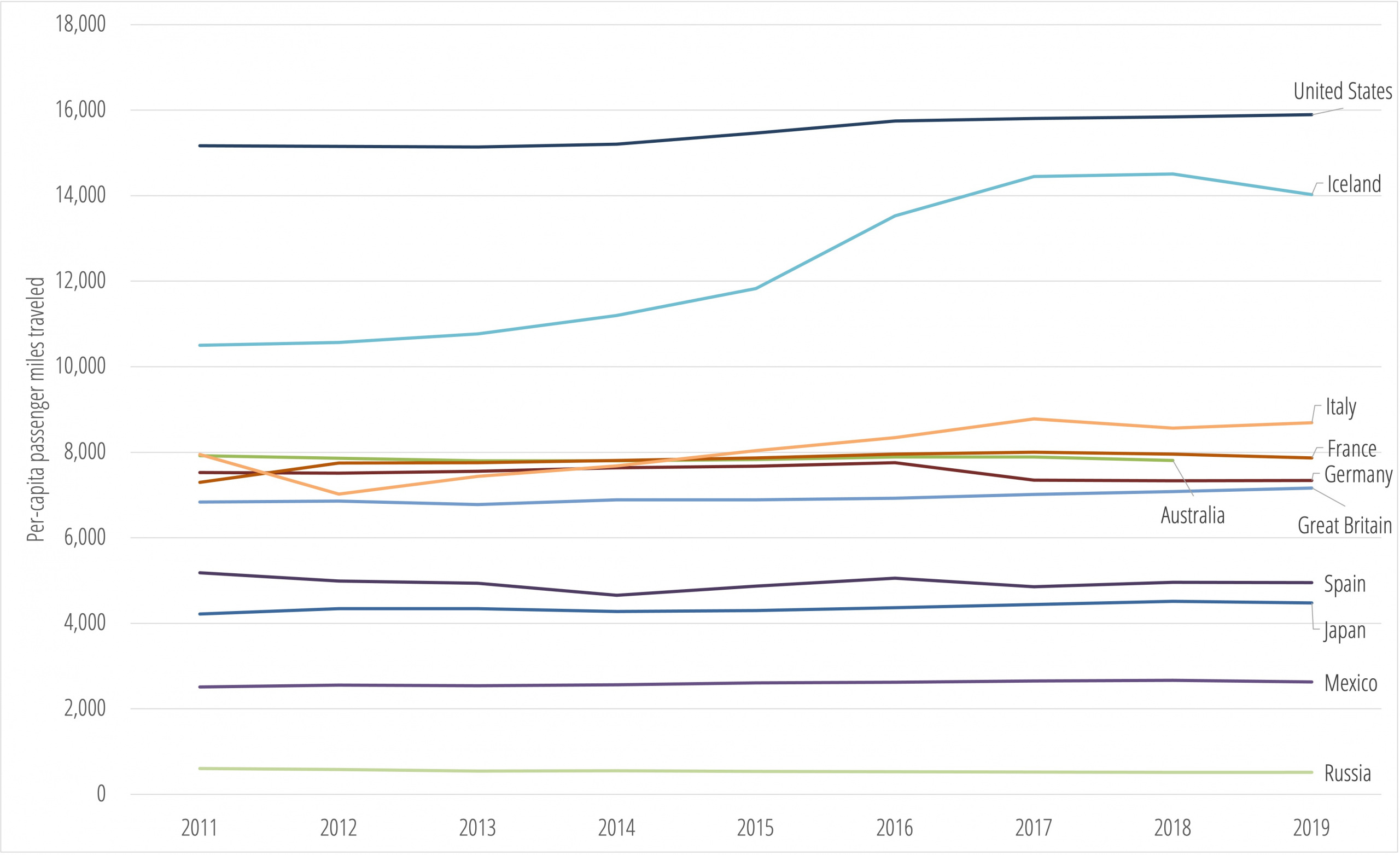
Herein lies the crux of the problem, not in the mode of transportation. Americans are used to such huge spaces per inhabitant that driving appears to be the only option.
We have districts with detached houses where I live and to me they were always sort of a dead zone. No shops, no restaurants, not even a way to get across, as every square metre is someone's property, so at times you'll have to take a huge detour on the way to your destination.
Do the people living there drive everywhere? Apparently not all of them and instead they accept that they have to walk a significant distance to get to the next bus stop. All because they're used to having a lot of space and will never sacrifice it for an apartment in a place where everything is closer.
Apartments are horrible. If you get a crying baby neighbor, or a dog, or neighbors who blast music at 3am, there’s nothing you can do about it.
Nothing. The police will not help you, as noise ordinance is not enforced. Your apartment manager won’t do anything because none of them do anything.
Other fun apartment specific happenings: constant clouds of marijuana smoke, curry spice smell seeping through the walls and sticking to everything, and constant thuds from anyone walking above you.
Without rigorous enforcement of rules, apartments suck. And there is no enforcement.
Suburban homes suck. If you get a neighbor mowing their lawn, weed-whacking, leaf-blowing, ignoring their dog endlessly barking outside, or partying late on their patio, there’s nothing you can do about it.
Nothing. The police will not help you, as noise ordinance either doesn’t exist or is not enforced. Your HOA, if you have one, won’t do anything because none of them do anything.
(Yes, this is tongue-in-cheek, but it is also rooted in real experience. Yes, I’m aware electric lawn equipment exists and somewhat improves some of the above when used. Nevertheless, city apartment living for me has been quieter than suburbia.)
Gas mowers are fast and run during the day. I couldn’t care less about daytime noise, because I sleep at night.
Animal control will eventually come for dogs left outside, but it takes some effort. The more property you own, the less this matters. And some HOAs DO enforce where apartments will not. HOAs aren’t in the business of making anyone happy, unlike apartments. They exist to do the opposite, in fact.
There are levels to apartments - I have lived in apartments like this in my 20s, but there is a whole world of single family condos that is more like my suburban childhood home. I live in a townhome in a dense area and experience no noise from neighbors beyond the occasional lawnmower or loud car. I’ve been able to find homes like that easily in urban centers in various parts of the US where I’ve lived.
I think you're right that cars are not a unique ill here. But I think it's worth observing that car-dependent societies disproportionately exhibit complexes of destructive patterns: car dependency goes hand-in-hand with insufficient urban design, poor transit networks, food deserts, etc. The latter aren't uniquely produced by car dependency, but are substantially aggravated by it.
They're related phenomena. In general, sprawl (associated with car dependence) tracks with food deserts[1]. Reduce the sprawl, and you reduce the need for cars to access affordable, healthy food (and corresponding absence of access when people can't afford cars).


The rhetorical title is absurd, however, and I'd argue even Ben Goldfarb would agree with that.
Habitat loss is the single largest driver of biodiversity loss, as a result of many, many drivers. You've heard of all of them. The presence and proliferation of roads is, of course, one of those drivers.