Soldering is one of those things where the tools you use have a direct impact on the quality and enjoyment of the work. Shitty $20 soldering irons from Home Depot not only produce awful results but they are incredibly frustrating. I’m pretty sure most people who think they suck at soldering and hate it only feel that way because their tool sucks. A good quality soldering iron and high quality, thin solder make a huge, huge difference in output.
If your experience with soldering is one of those cheap flimsy $30 dollar things from Amazon paired with fat, chunky solder… yeah you will hate soldering and you’ll never get even remotely good results. You don’t need to spend $500 dollar or anything but something like what is in this post and a $40 roll of thin gauge solder (which will last the rest of your life) will make soldering actually fun and enjoyable.
…I should also mention a solid, heavy parts holder factors into this as well.
I've been going through a 1-2lb of solder a year recently, and find myself needing multiple thicknesses and types. But, I've been repairing guitar amps, organs, building lots of microphone preamps, outboard rack gear, digital projects, etc. Kester solder rocks.
I do remember my first pound lasted about 15 years though...
Since no other navy nukes have chimed in on this thread to speak about ETMS—eutectic point is a huge piece of the puzzle and there are tradeoffs for selecting between 60/40 and 63/37. Fillets suck, bifurcated terminals are worse.
For any other Navy nukes, I wanted to link to a good reference on what ETMS is (was?) but couldn’t readily find anything. If anyone has a reputable link to publicly available course material on their solder grading rubrics or the 7-step, I’d be interested.
Why? Lead solder doesn't evaporate. The risk was always in recycling and maybe eating without having washed your hands. But you don't breathe in the solder, only the flux (which is even more toxic in lead-free solder applications).
we had overhead vacuum suction on all the terminals in the training environment. On the sub, not so much, but if you’re soldering^ underway, it’s because shit has hit the fan so badly that a bit of lead inhalation is the least of your worries.
edit: if you’re ^soldering *Nuke* stuff underway, it’s because things have hit the fan, and that’s the whole point of ETMS. Other rates also solder underway and might also use (did use) lead, and perhaps none of our inhalation was warranted.
Your last part undersells how important a parts holder is. Very often soldering is a 3 handed job. Quite frequently it is a 4 handed job. Somewhat often it is even a 5 handed job. You will save yourself a lot of weeping and gnashing of teeth and end up with much better results if you have a way to line everything up beforehand and hold it steady.
Let’s couch it in real terms. You can try to attempt something poorly 20x because you can’t line things up and your hand isn’t steady and do a poor job with worse aesthetics and in 20x the time, risking damaging your part, or you can get it right the first time with ease and have it look great because everything was lined up and there was no real way that shaky hands might ruin it.
I speak from personal experience here. Spend a little bit and save time, money, and sanity and get a better result.
When I first bought mine I tried to adjust the temperature in what felt like the natural way to do so, without rtfm first of course.
Then I quickly learned that I had adjusted the temperature calibration. I reverted what I had done but now I am not confident about the temperature its operating at, at all. Seems a terrible interface design.
I recalibrated by using the thermocouple on my multimeter.
That's not my biggest problem though - my biggest problem has just been keeping tips tinned properly. I've succeeded once, but it constantly feels like a struggle.
I found that brass wool works better at keeping tips tinned. A sponge removes all the solder and you have to quickly tin the tip immediately after wiping, otherwise it oxidizes. Wiping with brass wool leaves a thin layer of solder on the tip.
Also keeping the tip at moderate temperature range helps avoid oxidation - most manufacturers recommend to never exceed 400 C. JBC recommends to not exceed 370 C.
For affordable, semi-professional grade equipment, it is hard to beat Quick. I have Quick 202d + Quick 861dw. The tips on 202d are integrated with thermocouples and heating is indirect but inductive, which strikes a nice balance between the price of the tips (3x more affordable than cartridge tips) and performance (heats just like cartridge tips). The handle is light and has short grip-to-tip distance. I still use the original tips I bought a few years ago, so they last. I always soldered lead free and I’m shocked people on the internet find lead free hard. Some even said I must be nuts to solder lead free at 600-650F.
In the hakko line, fx-951 is the step-up which uses a heater and sensor in the tip (t15/t12 tips).
The alternative, for a hobbyist, would be something like this new iFixit iron, the Pinecil, Miniware TS80/TS100 or one of the variety of chinese irons from amazon and Aliexpress that take Hakko T12 tips (Quicko and similar).
On the high-end, professional side, it's JBC and Metcal. Expensive.
The handle is so light! Active tips! Heats up in 2 seconds. Goes to standby mode when you put away the handle to save the tips.
There's even a lighter compatible precision handle that you can buy.
Luke Gorrie posted a bunch of Twitter threads where he compare the sizes of soldering handles. Can't find it now but https://github.com/lukego/soldering might lead you to them.
I'm a ADS200 fan, too. Bought one recently after way too many years of using a 30W Weller. Having a big choice of tips is nice. As a bonus, it's made in the US. I've been able to tackle projects that I'd never have even thought of trying with the old soldering iron.
I can guarantee it is leagues better. Frankly, I won't solder anymore unless it is with a direct-heat iron. They heat up instantly, cool down quickly, provide far better thermal transfer, and are much more comfortable to hold.
Don't brush off what I'm saying before you try a direct-heat iron (Hakko sells them, Pace does, and JBC is the gold standard). They are usually expensive from the big names, but even a Pinecil direct-heat iron for $30$ would be many times better than non-direct-heat irons.
Oh man, I don't need to hear this. When I got my FX-888 I was blown away by the difference between it and the cheapo Radio Shack style one I had muddled through with as a teen. And now, for only $200 or so, I can get something that's another step change?
I don't even know when I last soldered and that's still tempting at a deep-seated nerd level.
I can't recommend a Pinecil enough. It's cheap as chips and basically has all the best features of other irons I've used. No complaints, I've half a mind to stockpile them and hand them out as gifts to nerd-inclined friends.
Enjoy! Best hidden feature is the Bluetooth connectivity that lets you dial in precise controls from your phone or browser. It's definitely a keeper, and doubles as "that one RISC-V thing I own" when your nerd friends drop by.
Me too, I used to think I hated soldering, until I tried a proper solder station in a shop, but for the amount of repairs I do, I couldn't justify spend 200 in something like that, but this PINECIL sounds like a great middle ground.
It's pretty nice. The key is to have a high enough wattage USB that you can feed it over 50w for a quick heatup, in my experience. I use a fast charger brick I bought for my phone and it works like a charm.
You're correct that some soldering irons (especially uber-cheap ones) are shit, but Pinecil proves cheap can also be good. Past a certain point, soldering becomes a hobby about how dangerous you're willing to get to make things easier on yourself. You can swap out non-toxic solder for lead trace if you want a cleaner board; then there are high-wattage irons, board reflow/fluxing, and even all sorts of scale-specific hacks.
When you zoom out, I think home soldering is about as effective as it can reasonably get without fumigating your house.
I think for simple through-hole stuff, this should be fine. However, so much stuff now requires SMT reflow and a hot air wand (and likely a binocular microscope) that except for home builds and power electronics, I rarely use an actual iron.
As you say, it's so much easier to get good solder joints (especially for the fine stuff like QFN/BGA) with lead blends and flux, that having a vent hood is likely required as well.
I have a cheap binocular microscope at home, and solder most everything underneath it. A USB microscope is much lower resolution, and the image lags. They're pretty terrible.
At work I get to use a very very expensive Olympus binocular microscope. It is extraordinarily good, but at about 60k it costs more than a car.
My digital microscope has no lag and brilliant resolution. You can easily solder under it just looking at the screen. Just don't get the super cheap ones but one for maybe 150€ or so.
Yeah you can get an old Bauch&Lomb for under $200. Probably need an LED illuminator ring for $10 too.
They have great field of view (cm) at decent/variable magnification (20-100x) and response time is instant, whereas your phone/USB are going to have just enough delay to be annoying.
I usually use my phone zoomed in + flashlight in video recording, and an external macro lens. It probably isn't as good as a usb microscope, but it works really, really well.
Looking at videos of people using microscopes, the quality seems to be on-par or worse than my phone.
I have a USB microscope and I'd say my phone on 5x soft-zoom is a pretty similar experience. The main thing is having enough screen size you can see, and a stable platform.
Plus USB scope things are like $80 on AliExpress and work fine.
I have 2 vision engineering Mantis and I have yet to see a video system that can rival it to work under it, no lag, “real” 3D vision (you can move your head to see behind magnified objects). The only things I miss sometimes is more magnification and a camera port to take pictures/ videos. As per soldering iron I could write a book, I had Hakko, Pace, Metcal, Weller, Ersa and to me the best experience is with JBC although the tips might not last if you’re not careful.
As much as I'd love to try your suggestions, they're very expensive even in that space.
From what I can see, the Mantis microscopes are in the $3500+ range and the JBC stuff is similarly expensive.
Most hobbyists would cringe at the price of buying a Thermaltronics soldering iron and that's like 5x cheaper. However, I can at least conclusively demonstrate the vast difference between something like that and a Hakko right in front of a person.
This stuff is like the difference between a $100 guitar, a $500 guitar, and a $2000 guitar. The difference between the $100 and the $500 one is obvious to almost everybody. The differences between the $500 and $2000 one won't be obviously noticeable until you get a lot of experience.
Absolutely, don’t get me wrong, all the other brands are fine tools, and nowadays even aliexpress soldering stations work wonders even for professional use, years ago only metcal and JBC had the “instant heat” technology, same for the microscope 4k 120fps cameras are trivial now but not so long ago they where unaffordable for the common person and optical stereo inspection micoscopes were a bit more affordable but the working distance and as commented here they are uncomfortable for longer use, the mantis was a revolution in that too.
My mother was recently cataloging some very small pots from an archaeological dig. I sent her with my nice camera, a prime lens, some macro adapters, and an adapter that would let her mount the body to the eyepiece of a microscope. The detail she was able to capture with the prime and macro adapters so vastly exceeded the capabilities of the university microscope that she decided to just use the camera, which had the additional advantage of having focus stacking to compensate for the shallow depth of field.
I would expect that this setup would work pretty well for a bench microscope setup if the camera can output video and isn't too big to mount on a tabletop tripod. Rather a lot can be done with crop zoom if you can get the focal length and lighting right.
You seen knowledgeable. I've used leaded solder in my bedroom / apartments since community college, usually with a fan in the room or a window open. What damage could have or has happened?
The biggest danger that's specific to leaded solder is accidental ingestion. Both the common methods of cleaning your iron (damp sponge and brass wool) produce many tiny little balls of solder. They're difficult to see, and because they're round and dense they easily roll and bounce to unexpected places. They can get caught in your clothes and potentially end up falling in food.
The fumes are flux fumes, not lead fumes. They're still bad to breathe but not specific to leaded solder.
In all seriousness, very little. I would personally want more than just a bathroom fan to do fume evacuation. Outside on a patio/balcony is my usual spot. I also have a 120mm computer fan that I hacked onto a gooseneck mount so I can blow the fumes away from my face.
The times I can't be outside, usually due to weather, I use a table right in front of an open window, and one of those dual fan window fans set to exhaust mode, and that sucks the fumes outside effectively.
I'd call that a reasonably good setup, and, as a bonus, the fumes don't hit me directly in the face, which soldering fumes have a tendency to do.
I mean, it depends. It's mostly dangerous to kids, because it's detrimental to brain development. Not exactly vitamins for anyone though.
Also something to remember about ingestion is that, lead only forms salts in acidic environments, and, your stomach is quite acidic, which is why it's such a problem. Combine that with lead accumulating in your body and, well, it's best to avoid it, and it's simple enough to avoid it.
I'm no doctor, but if you've only done a few hours of this and you're 20+ it's probably no big deal. However, you are breathing lead vapor and it's not good for you (if you're at 100s of hours and 12yo that's really not good). If it gets on things you eat, it's also bad. The effects are permanent.
We had leaded (Ethyl) gasoline in cars which was banned 25 years ago and that had noticeable statistical effects on IQ an emotional regulation (violence) for more than a generation.
Well, like I said I'm no doctor, but I don't know that I'd use quora to make medical decisions.
Here's an environmental safety article from MIT. It mentions lead oxide fumes from soldering. What do I know other than the required lab safety training.
It says that lead fumes are unlikely to be generated:
Based on standard soldering iron temperatures of 620°F-700°F and the melting point of lead (621°F), it is unlikely that lead fume will be generated during electronic soldering, unless the solder is heated to lead’s vaporization temperature of 3182°F.
Interesting that you skip right past the part that I mentioned about lead oxide fumes.
   "During the soldering process in the form of lead filler metals, lead oxide
   fumes are formed and excessive exposure to lead oxide fumes can result in
   lead poisoning."
At hundreds of hours, you're fine. Honestly, even at thousands of hours, you're probably okay.
Most of the fumes come from the flux boiling way, not the solder itself. (Mind you, I still wouldn't recommend breathing flux fumes. Those are bad in their own way. Adequate ventilation is important!)
Lead is unequivocally bad for you, but the amount that actually enters your system from soldering activities is miniscule.
It's good to minimize these substances in our daily life since they do add up over decades. The problem with leaded gas in cars is that there were just so many cars out there burning the stuff. Duration of exposure and amount of exposure both matter.
That said... do wash your hands after handling leaded solder, especially before eating.
(I used to have a summer job in high school assembling circuit boards for an electronics test company. I easily clocked a couple hundred hours soldering under a magnifying lamp with leaded solder. I'm sure the burns I gave myself from accidently touching the soldering iron itself did more damage than the lead. :P)
> The problem with leaded gas in cars is that there were just so many cars out there burning the stuff. Duration of exposure and amount of exposure both matter.
The difference is not the amount of cars, but that the temperature and pressure in car engines makes lead vaporise, so it can be breathed in.
A soldering iron doesn't reach those temperatures (vaporising the lead is the opposite of what you want when soldering).
Interestingly enough, the leaded-solder topic is a hot-button issue in some online communities. People get angry about it, and I don't have an explanation for why.
As a (former) owner of a dogshit soldering iron, I think it makes sense. People with weaker irons struggle to work with unleaded solder and tend to write it off entirely mostly because of their equipment. If you have an appropriately hot iron, both types of solder will generally behave the same which makes it a bit of a no-brainer to use non-toxic solder.
That being said - leaded solder is easier to work with regardless of what iron you use. It's very easy to fix mistakes and even wicks up without a trace on most PCBs. I personally don't use it, but I think it's easy to see how people will blame their solder before their iron.
You can get good temperature-controlled 936-style soldering stations for less than $30. Spend the rest of your budget on solder, flux, and an assortment of tips.
I haven't found flux to make much a difference at all to the problems I have with soldering. It turns liquid, and nothing happens still - and I've gone through a bunch of fluxes at all brand levels.
And patience. As tempting as it may be, don't think "if I double the temp, I won't be waiting for this big joint to start pulling in solder".
good flux, clean/sharp tip and proper patience can take you a very long way! (a steady hand and good rubbing alcohol will take you the rest of the way)
dunno. my first ever soldering project was a handwired keyboard. i was popcorning when i finished. it was my first time using a mechanical switch keyboard too. not bad... 2° project, right after finishing the keyboard was soldering a PMW3360 sensor to someone's board from Github. it was a freaking blast on my 40W, 40 BRL (~ 8 USD) solder
i still have it & i'm selling handwired keyboards at a very cheap price (made with it), trying to set a non-profit that sells fair priced handwired keyboards with Vial & aims to teach the basics of electronics for teens... i can't see myself supplying anything more expensive than cheap solders, nor i can see what joy i would get from an expensive solder tool
Oh good. In the context of soldering "popcorning" typically means explosive steam formation that puffs up the package a part, often an expensive part because bigger / more complicated packaging is a risk factor. I was having trouble making that fit with the rest of the post.
That's wonderful - I used to solder with a cheap iron until university. A nice iron gets a lot hotter, and it makes everything easier and faster. It may not matter for keyboards, but on a small PCB where everything is a few mm part, the precision of a good tip matters too.
> …I should also mention a solid, heavy parts holder factors into this as well.
I'd just like to note for anyone googling for one after reading this- the Harbor Freight "helping hands" holder and its ilk are the exact opposite of what you want, unless your goal is to have your target falling over endlessly.
If my daughter dated someone who could solder, I think she would roll her eyes and find someone else to date the first time we geeked out over hardware.
Agree. It's kind of like a chef's knife: a better tool makes you a better chef.
A sharp knife is also quite a bit safer than a dull knife. By heating to operating temperature in 5 seconds and rapidly pouring heat into the material, you don't have to hold the hot iron as long. As soon as you're done, pop on the safety cap and instantly shield the hot metal.
Soldering isn't remotely mainstream, and part of that is the quality of tools. We set out to streamline the entire process to make soldering as accessible as possible.
For all edge tools be they for cooking, woodworking, forestry or something else: buy steel, not sharp. Henkels, Lie-Nielsen, Gransfors Bruk, Victorinox, or Stanley is only going to sharpen it for you once.
Corollary: learn to sharpen. The best steel in the world isn't going to cut anything if it's dull.
For the record, I sharpen chisels almost daily and I hate sharpening kitchen knives. The carbides set at the right angle in the handle you pull down the length of the blade will keep your knives a lot sharper than a set of Japanese water stones you never use.
If you live in a reasonably large metro area that has a lot of good restaurants, there is going to be a small handful of cooking knife sharpeners. A large percentage of professional chefs can't afford/justify good quality sharpening equipment for something that they use a couple times per year.
They'll take their knives to these services and pay $5 or $6 per knife, and it will get done to perfection in just a few minutes while they wait. You can use these same services, there is no membership card needed to get in the door.
I live at the literal end of the internet: there are no more poles beyond our house. Surprisingly, one of the hardware stores in the area has a robot knife sharpener. I'm tempted to try it, but the only time I remember is when I'm already there without a knife!
When we were still in the Boston area, a lot of the hardware stores and farmers markets would have a knife sharpening service come one day a month.
I’ve been told to stay away from any kind of sharpening that isn’t specifically for cooking knives - the angle of the blade is supposed to be different.
I don’t have actual knowledge, just what I’ve been told by chefs.
I am completely confused by your example. Buying a better knife doesn't make you a better chef. Buying a faster car doesn't make you a better driver. Buying a more powerful laptop doesn't make you a better developer.
Do you cook? There are dozens of obvious examples. A crappy knife will tear instead of cut. You'll ruin tomatoes, have uneven dices, crush and smear delicate herbs, have ripped apart meat and fish that you'll destroy more trying to get rid of the trim. That's not counting the downtime you'll have when the knife slips instead of cuts and you can't cook at all due to injury.
Giving an expensive knife to a new cook that has never cooked before will not make them a Michelin chef, but their progress will be faster when they don't have the knife working against them.
> Giving an expensive knife to a new cook that has never cooked before will not make them a Michelin chef
Pick any Michelin-rated restaurant at random and visit the kitchen. You'll find plenty of $50 knives in use. It doesn't take a lot of money to build a good-enough-for-world-class-cooking knife. Once you get beyond a certain price point, it's mostly about personal preferences and "situations that apply to me but may or may not apply to you".
Hmm. I'm far from an expert, but I have seen chefs at work in person in about a dozen michelin star places over the years, and in videos/books/etc. of many more. My anecdotal experiences have lead me to believe that no, the knives they use for the majority of tasks day in and day out are not $50 knives. They might have some cheaper knives (usually victorinox from what I've seen) for specific purposes but when it came to chef's knives/gyutos, they were all more expensive. Not necessarily super expensive - I've seen tons of Globals, Macs, and Misonos over the years and their stuff is more like the $150-$200ish range. But I've also seen people with high-end small production Japanese blacksmiths, too.
Fair enough, but for anyone wondering, you can make a shit knife shine if you take good care of it! Sharpening it, using a chef's honing steel in between some harder cuts to take care of those nasty burrs and you're off to the races!
I cook, and I disagree with the assertion that a better knife makes you a better cook. Good knives are useful, but ultimately you're still going to produce crappy results if you're a bad cook with a good knife.
A bad dull knife bruises and smashes more than it cuts. If a first time cook was making a salsa, the one made with the good knife would be better as the tomatoes would be juicer and not all smushed.
The only thing a better knife does is save you prep time. Being a good cook is about understanding how different materials cook, when different foods are "done", how flavors work together, and how to improvise when things go outside the plan/recipe or adapt to novel situations.
Cutting technique is only important if you're a professional chef with actual time constraints and can't afford to spend an extra 30 seconds cutting an onion.
While I do agree - you can (or should be able to) get any knife to shave. They may lack edge retention or proper geometry but slicing/cutting/chopping is doable with pretty much any knife, as long as you can sharpen them. I'd say getting any knife to cut tomatoes flawlessly with just a brick and some water is not a hard task.
That being said, I still prefer diamond stones (sharpening wise)
I have a ~80 dollar knife that is dull as an EA and you're vastly exaggerating.
Tomatoes, meat, fish, I use my $4 serrated knife. Everything else is fine. With proper technique it's basically impossible to cut yourself even with a very dull knife.
I don't cook, but I solder. And I got a lot of mileage out of a dirt cheap Radio Shack iron. Well, I do cook, but I'm not into it or as skilled at it to the degree I am with soldering.
That is a common fallacy, I suspect it comes from having enough budget to not having to think about being able to afford something decent.
It is like photographers with $5,000 worth of equipment in their camera bags telling you that equipment doesn’t matter. I mean, there is a reason why they spend all that money right? Of course a good photographer will be able to get good results with a cheap camera, but only in situations where that cheap camera can actually capture the scene. For example, if it is not sensitive enough to capture enough light at night time, you are not getting night time shots, period, no matter how good you are. (this very much used to be a thing 10 years ago)
If you employ programmers, you will buy fast workstations because it will make them MUCH more productive. A slow computer will interrupt your work by making you wait.
I think it is in fact the exact opposite, the better you are at something, the more likely it is that you become limited by your equipment. I will probably not be able to cook better if I get very expensive knives. But I would speculate that an actual professional cook or butcher will be able to work better with sharp knives that keep their edges well.
Programmers are also frequently better equipped to make underpowered machines work for them, by adjusting their techniques, monitoring resource usage and stopping or uninstalling things like bloatware. Whereas normal people will tend to struggle if they just buy the cheapest machine they can find.
The problem is that bad tools can be a limiting factor, regardless of skill level. The more skilled you are the more likely you are able to compensate for bad tools, but you'd still be more productive with good ones.
A knife that won't hold it's edge will mean you are explicitly going to perform worse as a chef - you will get ragged cuts, you will be more at risk for injuring yourself, etc.
A slow laptop will mean you learn more slowly - doubly so if you are working with compiled languages or anything where you spend significant processing time before determining the outcome of whatever you're working on. The quicker you can get feedback on your work, be it from compilation errors, manual review of the output, your tests running, etc., the more you get to iterate and the more you get to learn.
A cheap soldering iron explicitly can make soldering more difficult and result in worse outcomes, particularly for a beginner.
Be it cooking, soldering, photographing, programming, whatever, there is frequently a point where going from a cheaper tool to a more expensive one will make the life of a beginner easier and let them produce better outcomes. As you get more skilled you can learn how to more quickly and easily sharpen knives, or produce fewer bugs in your code, or how to better handle aperture vs. ISO or whatever. But in those cases there will still often be productivity/efficiency gains from using nicer tools
no, but with a shitty laptop it can be hard to be a good developer. having dull knives will make cooking experience, slow, dangerous, and unpleasant. having a boat-car will make it difficult to practice any sort of skilled driving.
it's not that you can't overcome adversity and do the thing anyhow, but you're certainly not making it easy. In all cases, using the proper tool allows you to remove the extra difficulty factor and focus on that task at hand.
But also, cutting a tomato with a sharp knife is way, way easier than with a dull knife. Same with soldering. Ignores the rest of the parts of being a chef, but you get the comparison.
"Better" is definitely the wrong word, but the jist is sound with the right framing. A better tool often allows you to do work safer, and that is what was attempted to be conveyed. Applying the approach to one of your examples, a faster car doesn't make you a better driver, but a car with more safety features makes your driving experience safer than one with less.
I'm not sure what that has to do with better vs worse tools. Expensive knives get dull too. Good chefs, on the other hand, keep their equipment in working order regardless of its value.


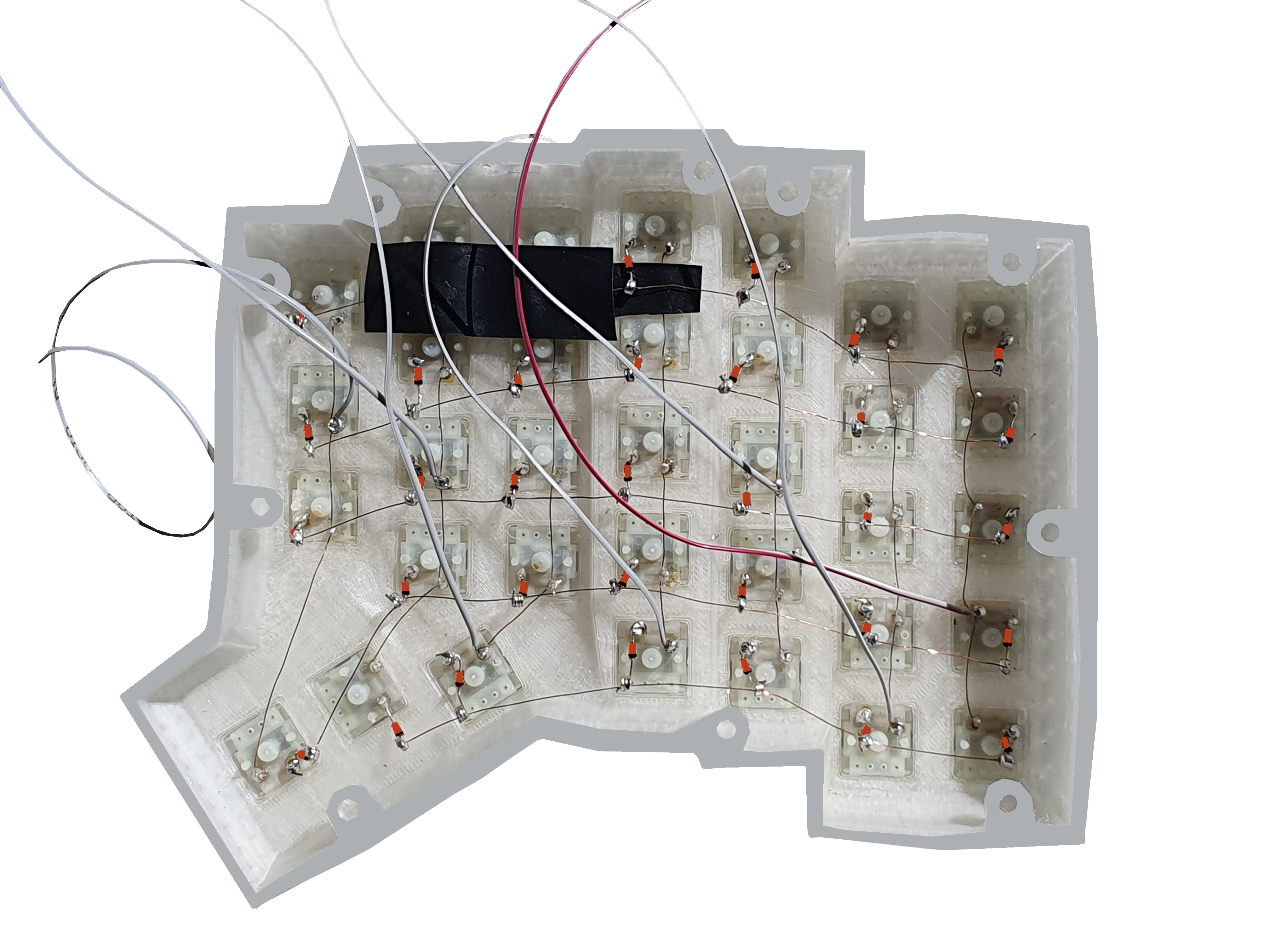
If your experience with soldering is one of those cheap flimsy $30 dollar things from Amazon paired with fat, chunky solder… yeah you will hate soldering and you’ll never get even remotely good results. You don’t need to spend $500 dollar or anything but something like what is in this post and a $40 roll of thin gauge solder (which will last the rest of your life) will make soldering actually fun and enjoyable.
…I should also mention a solid, heavy parts holder factors into this as well.