Bone dry here in Utah. Just as local government has been lowering their guard on the Great Salt Lake issue due to a couple strong snowpack years. Really hope we're proactive in response to the lack of snow.
Unironically, wet / dry cycles isn't good news for California either.
Research published in the aftermath of the fire examines how this extremely wet to extremely dry weather sequence is especially dangerous for wildfires in Southern California because heavy rainfall leads to high growth of grass and brush, which then becomes abundant fuel during periods of extreme dryness.
I wonder how much of an effect human activity has on these cycles. Obviously, there are cycles within nature that don't include human activity but is this particular "equilibrium" (if we could call it that) the result of human settlements and all that entails or have they always happened this way but without a huge chunk of the population being in the midst of these modulations to witness it and be affected by it.
This might be a good time to recommend you all read the first 5 pages of East of Eden by George Steinbeck. It’s about how the Salinas valley goes through flood and draught cycles, and how every time they’re in one cycle they forget the other one ever happened
Huge amount, but maybe not in the way you intended.
Many of California's ecosystems have evolved to expect fires. Humans can't stand fires and aggressively put them out. So fuel that would be regularly burned off in mild wildfires instead builds up into megafires that exceed the limits of what the ecosystem can handle (a lot of California trees are fire-tolerant, but there's a point where the flames get too high and too intense).
So yeah, the human activity that affects these cycles is caused by our cognitive dissonance and fear to phrases like "mild wildfire".
Depends on how you quantify human impact. Lodgepole Pine (for example) is fire adapted. That's not something that evolved overnight. So it's safe to say that broad swaths of California have been experiencing a feast-famine cycle since before humanity developed agriculture.
Most of the actual wild fires just get put out. The big ones are happening because the build up is too big since all the smaller ones have been put out. It's all in service of the forestry industry.
what difference does the cause make if the end result is exactly the same as a natural event?
secondly, you could just as easily make this a case against CA environmental restrictions on logging. How many houses could have been built with those trees that went up in smoke? How many people could have been employed by the lumber industry? Now all those "green" trees are CO2 warming the atmosphere. It's almost as if CA wants crises (housing, employment, environment) because it gives their politicians more money and power.
Well, for starters, the Dixie Fire burned nearly a million acres and huge swaths of the Plumas and Lassen National Forests - the largest and most expensive fire in California history. It burned 70% of Lassen National Park.
I agree that forests are an economic resource and would argue that a fire, caused by humans and exacerbated by human forest management, is a devastating outcome economically. These aren’t wildfires that are merely periodically clearing the forest floor allowing for better forest propagation, they’re burning hot enough to kill everything - trees, soil, and anything in between. Along many parts of the Pacific Crest Trail in Northern California, you can see aspects of slopes that have been burned at various times over decades and see that those forests burned are struggling to come back. I hiked the entirety of the Pacific Crest Trail this past summer and would argue that I have a decent sense of the status quo of the scope and qualities of the devastation of forest fire in those forests affected by those fires I’ve cited.
What difference does it make?
1. These aren’t forest regenerating/undergrowth clearing events - they’re apocalyptic in their devastation. A million acres unnecessarily burned in the Dixie Fire.
2. Forests are limited, threatened resources. Muir wrote a passage calling the sheep herd he was tending in his first summer in his beloved Sierra “hooved locusts” but managed to rationalize the devastation wrought by those sheep immediately after by reasoning that there still remain thousands of untouched high Sierra meadows. Just as there aren’t a thousand Tuolumne Meadows, there aren’t a thousand Lassen or Plumas National Forests. Every single one is irreplaceable on a timeframe that takes into account forest regeneration and the scale of these fires.
3. Paradise, CA. was completely devastated by the Camp Fire - the deadliest and most destructive fire in California history - and started by poorly maintained PG&E power infrastructure. Lahaina, Hawaii was utterly devastated in a similar fashion by a fire with a similar causes Even ignoring that our forests are being irrevocably destroyed, human caused forest fires are engulfing and destroying entire communities, killing people unable to evacuate ahead of wind driven firestorms.
4. Besides forest health, threat to life and property, here’s one that I’d actually expect to land: the threat posed by increasingly powerful fires started by humans and exacerbated by human activity (including the forest management you cited) driven by increasingly extreme weather conditions and events is going to make home insurance untenable. People are already being widely priced out of insurance markets whose actuaries are now pricing in risks that include potential for outcomes like every single home in Lahaina/Paradise/Malibu/Santa Monica is devastated.
What does it matter? Well, even handwaving away the devastation wrought on our forests by man made fire, those fires that affect you and your home insurance bill are essentially that complete set of fires that aren’t naturally occurring events. You don’t have to take my word for it - an actuary will have you understanding it sooner or later.
Not great up here in Vancouver either - lots of rain but not snow. The problem with this is that even though we'll have full reservoirs at the start of the summer, when the rain ends, we deplete the lakes rapidly, and that slope downward gets steeper every year. It really makes me think that we'll need more dams, more reservoirs, to hold in more of the precious fresh water rather than letting it all run out. All winter long the rivers have been at really high flow rates because the lakes are full and the dams are wide open letting it go... but we'll miss that water in a few months!
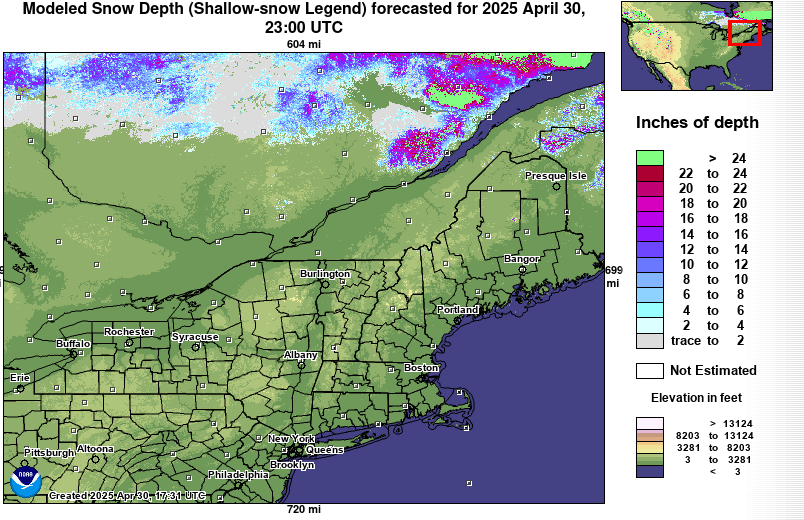
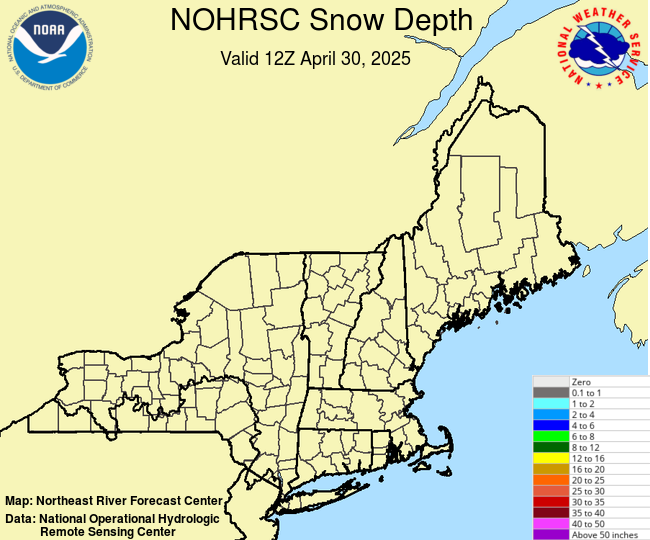
Damn, is this the first time ever the east coast is doing better than Colorado? We’ve had record snowfalls all over Quebec, I spent all day last Friday skiing in a foot of fresh powder. Unheard of on the ice coast*.
*not literally. But still, crazy amount of snow this year so far


https://www.washingtonpost.com/weather/2026/01/18/winter-dro...