Moving from Europe to the US really made me appreciate recessed power sockets - the standard US Power Socket is a crime against engineering (and don't get me started on 120 vs 240V).
If I was Emperor of the Universe, I'd make the Type G plug the only standard: Longer ground contact that makes contact first, plastic cover on the plug-facing side of the hot/neutral contacts, polarized because there's only one direction to plug it, built-in fuse. Make it recessed, and it's perfect. And since it's rated for 250V/13A, it's great for any household device that doesn't need three-phase power.
Yes, it's chonky, but the more I learn about power plugs and sockets, the more I see how well designed it is. Unless someone from the UK knows if there are actual issues with it :)
> the standard US Power Socket is a crime against engineering (and don't get me started on 120 vs 240V)
What's so bad about a NEMA 5-15? I grant you it's not as fancy as the Type G, but I've certainly never been shocked by it, so I'm not sure if it's criminal.
US households have access to 240V if they want it (and most homes have at least a clothes dryer outlet wired for this). About the only thing I would really prefer to have 240V for is an electric kettle.
I've seen so many sockets that were worn down over time from the weight of the plug just hanging out from it, usually straight since most aren't angled. (because there's no strain relief either, which a recessed socket would provide). So you have plugs that are usually exposing parts of the plug thanks to gravity.
Yes, it can be fixed by replacing the socket, but it's just such a terrible design. (The 240V socket isn't much better - if I was wiring my house for 240V, I guess I'd have to use that one to be up to code, but I'd really consider importing some Schuko sockets instead)
As someone who has used most of these standards, save for some of the more esoteric ones, I can honestly say type M is best - all the benefits of type G, but won't literally stab your foot when you step on it (I'd link some nsfl photos if I weren't on mobile).
Built in fuses are quite archaic - circuit breakers are better, and if you really need one, build it into the appliance.
Any socket that is compatible with type C plugs tends to have plugs that easily break if any kind of bending or shearing force is applied to it while plugged in, and the equipment manufactured for it (adapters and multiplugs) tend to be cheap, not make good contact and allow the plug to fall out easily. I've never encountered a type M socket that didn't Just Work™
The G standard plug should be classified as a cold weapon as it's so big and heavy and flat that it could be used as a mace or as a booby trap for burglars.
CEE 7/7 is where it's at. Couple that with some future CEE socket standard to make all the best engineering in type-E and type-F standard (polarised connectors from E, and earth tabs on the outer rim from F, plus protective shutters), and it'd be perfect.
Type E and F's plug are shown in their combined version (the Schuko), which is the standard today. I have two old appliances (an egg cooker from the 1980s and a sauce machine from the early 1990s), which have the type F and type E plugs, respectively, i.e. not the combined form. Living in Denmark, the usual K to Schuko plug is using the E socket (i.e. "French ground"), which makes it hard for me to find a grounded socket for my egg cooker (which I believe is German). (Though, because this converter takes up a bit of space, on some appliances, I have removed the Schuko plug and replaced it with a type K plug to reduce space required. I have been thinking of doing the same for the egg cooker, but there is something quaint about an actual type F plug.)
You learn something new every day. Thanks. I was not aware that such a machine exists, or that making sauce is so important in some cultures/places that you have a dedicated machine for it.
I was surprised to learn this. My Brazilian friend said you just had to know what outlets in the house where 110 and which were 220. If you got it wrong then the magic smoke came out.
Nothing wrong with the socket itself but the use for different voltages is terrifying.
Not pictured, but the US also has a socket that looks like type B, but it is for 220-240v (mostly used for window air conditioners, or tools). It is not compatible with the normal type A/B socket/plugs though because one of the pins is sideways.
I once saw a house in the US which had outlets that would accept either type, and you had to know if it was 120V or 240V. IIRC this was a type A socket, but it would accept either voltage.
I think you're confusing a NEMA 5-20 (120V, 20A) and NEMA 6-20 (240V, 20A). Each has one blade sideways but they're mirror images of each other. T-slot varieties of both outlets are common, which can accept both 15A and 20A versions of their respective voltages. You won't find outlets that can accept both a 120V and 240V plug.
This house had sockets that would accept NMEA 5-15, 5-20, 6-15 or 6-20. (I forgot the numbers until you mentioned them). It wouldn't be allowed now, but my guess is the house was built in the 1950s.
Those outlets existed because pre-NEMA there were competing parallel and tandem bladed plugs/sockets [1]. The plugs you saw were probably like examples 2 & 3 in that link. The parallel configuration became NEMA 5-15P and the tandem became NEMA 2-15P.
The NEMA 6 series is wider than the 5 series and the 6-15P probably won't fit in those old outlets, but the NEMA 2-15P would. . . if you could find one.
Ah yes, I have seen those before (quite rare). IIRC they don't have holes for the grounding prong, which should prevent plugging in any modern 240V appliance.
I should expect that they ought to mark each one with the voltage label to know what it is, if they do something like that.
(Using a different shape might be even better, to avoid plugging it wrong by accident or if it is dark and the label cannot be read or it is faded and cannot be read, etc, and you can more easily tell which device works with which plug because the shape matches the devices being plugged too.)
Multiple AC standards is just fine, so long as all the sockets are physically different so you can't screw up. Electricians are expected to know all the weird rules and get things right, but normal people can't make a mistake so it works.
Almost all US houses have two voltages, but since the sockets are obviously incompatible it all works. I've seen industrial buildings that have more than one grid connection (and in one case they paid extra to ensure the grid connections went to different sub stations)
Interestingly and semi-related: in Japan, the electrical grid is divided into two frequency standards: 50 Hz in the eastern part of the country (including Tokyo), and 60 Hz in the western part (including Osaka). Which was due to influence by German tech in the east and American tech in the west. Electrical appliances have to be labeled to indicate their compatible frequency to warn customers
On a side note: anyone know equipment that works on 60 Hz but not 50 Hz, or vice versa? I don't mean what's specified on the label, but actual operation. And ignoring efficiency considerations. Just "works" or not.
There's clocks that use AC mains frequency as timebase. Anything else?
Motors, wall warts with line-frequency transformers, or other things that are an inductive load. Magnetic materials designed for 60 Hz may saturate at 50 Hz, though usually things designed for 50 Hz will at least sort of work at 60 Hz.
Other than clocks almost everything is designed for 50 or 60hz. it doesn't cost much more to design for either frequency, and typically you don't care about the RPM difference that much. By handling both you can just sell your things around the world. A lot of money has been lost because someone shipped something to a country it wasn't designed for. Making a motor that can handle different frequencies and voltages tends to be easier than the logistics of getting the right thing to the right place (most of the world is 100-120V, 200-240V, or 400-480V - and those variations are easy to handle if you design for it).
After the whole lightning to USB-C plug fiasco for the iPhone, I wonder if the EU will ever throw their weight to force certain smaller countries to adopt more popular socket standards. It might even be done in the name of "reducing e-waste".
Just looking over the list above, it seems like Type-J (Swiss & Liechtenstein only) and Type-K (Denmark & Greenland only) are prime candidates. I'm only looking at sockets within the EU border btw.
You need to take Type-J from my cold dead hands. The image shows a quite important safety feature (and misses one):
The socket is recessed into the wall, and only the frontmost part of the plug is conducting. That means that while you are plugging it in, there is never any metal exposed. Contact can only be made when the plug is already quite far in the socket.
The second feature would be to mount the socket upside down, so the center hole (the ground contact) is on the top. Metal objects falling down on the plug are prevented from making contact with the two current-carrying contacts and usually bounce right off the center contact.
> The socket is recessed into the wall, and only the frontmost part of the plug is conducting. That means that while you are plugging it in, there is never any metal exposed. Contact can only be made when the plug is already quite far in the socket.
Same thing for E/F... the actual metal connectors for power are recessed in socket so when socket is in you can't touch anything before it even connects power, because plug itself covers the socket
But yeah, type J is more compact one, althought only 10 amps is laughable
What domestic device are you using that consumes more than 2.3kW? My vacuum cleaner with 900W is the most power hungry one I can think of. That is a pretty wide margin.
A 3kW kettle is the classic 13A appliance in the UK. I'm sure people would be keen to have a higher power version if possible, but lowering to 2.3kW would waste precious tea drinking time.
I've also got a 3kW plug-in electric radiator for emergency heat in the attic, but except for poor households in crap rented accommodation (lowest capital cost per kW and portable on moving) that's pretty niche these days.
While the compact-ness of Type J is very convincing, I personally like Types E and F best. This is because the ground is exposed, so you can quickly touch it to remove any static charges from yourself. I do this f.e. before handling circuit boards.
Switzerland and Liechtenstein are outside the EU. As for the type K, type F sockets are already permissible in Denmark, and are not uncommon in newer installations. The page on type K mentions that the expectation is that type K will be phased out eventually, as newer installations use type F, but I haven't really seen a lot of type F sockets, and there are no mandates to change existing installations.
Type J is a good design, the Danish one is quite unique. Too big. Schuko is too big as well. I installed Italian Type L/Type C sockets for 10 amp type C plugs where I had half a module left.
The EU has no jurisdiction over Switzerland and Lichtenstein.
The one on this list that surprised me is type O, because it's specific to Thailand and only standardised in 2006, which means that in the 21st century somebody decided it was better to invent a completely new plug-and-socket spec, rather than adopting any of the pre-existing standards...
Moreover, the type F plug easily fits into a type O socket, but without ground and contact insulation. It is a big risk if they import appliances with type F plugs, or if, for example, European tourists visit Thailand bringing their own electrical devices.
I wonder why Thailand didn't just adopt type F like the neighboring countries.
Somewhat paradoxically, it's actually safer from a consumer safety perspective to assume that you don't have a polarized connector. The big reason is that the consumer can see fit to make modifications to meet their circumstances.
If the culture here in the US of filing down the wider blade on polarized plugs so they'll mate with an unpolarized receptacle is anything to go by, people just want to use their stuff, safety be damned.
Polarization is only safer in the case of a screw in light plug (ie light bulb) where the design makes it likely you will touch one of the live wires - if that wire is the one connected to ground you can safely touch it.
It's also helpful when dealing with old hot chassis appliances such as antique radios, where the metal case is wired to what is hopefully neutral but can be at line voltage if the plug or socket is wired in reverse.
Of course. Ideally we'd be able to have all appliances be polarizing agnostic and write that into any standards, and then be able to enforce those standards.
Oh you funny man, thinking we have polarized ones!
Brits do I think, but most of the eu has unpolarized ones.
One of the common 2 socket wall sockets for example have just straight bars connecting 2 sockets being 180 degrees rotated, so each socket have line and neutral on different connector.
So if you say put a tester in it, one socket will read "correct" while other will read "L/N reversed"
Saves a lot of space too. One thing that’s bothered me with most popular socket variants is how wide their power strips usually become.
I think the Italian one is the most practical variant that unfortunately isn’t as ubiquitous. It (1) occupies less space, (2) reversible, (3) sticks to the wall more firmly unlike the flat-pronged ones in North America.
I know people make fun of the UK plug for being too chunky, but I really like its solidity. It feels like it will actually survive a few years in a home. Plus assembling them at school was always fun.
Cylindrical plugs are the best plugs. It's a pity there isn't a mains AC cylindrical plug and socket, like the low-voltage DC barrel connectors [0]. You never have to think about the orientation; they're always the right way up.
One weird quirk I've discovered is 2-pin Swiss plugs appear to have smaller diamater pins than EU ones, which means some EU-compatiable plugs will not fit in CH sockets. Apple's BRA adaptors work in CH sockets, KOR ones do not.
While traveling in Europe recently, I noticed that my adapter from the US plug to the European one didn’t always quite fit into the sockets. I wonder now if I was seeing some small incompatibility between Type E and F…
I wish NEMA 6[0] receptacles and plugs were more common in North American, especially in the kitchen. I would love to have access to 240 V for counter top appliances like my electric kettle and toaster oven. A single receptacle compatible with both 120 and 240 volt plugs would be even better.
There are single receptacles capable of both 120 and 240V. They're called NEMA 14. NEMA 14-20 technically exists, which would give you multi use 120V or 240V 20 amp outlets. The problem is nobody uses them, as this is non-standard and nothing uses the plug besides industrial stuff.
Unless there's a truly useful application, I doubt it'll see wide use in US. Sure, 240V is nice, but there just isn't that magic thing missing from 1800W appliances today. Being able to boil water a little bit faster is not worth rewiring every house and changing standards around the country.
Extremely safe and easy to produce and it's finally getting properly adopted by China
It can actually take 230V at 32A but these are extremely rare and have a modified keyed ground pin
But tbh the biggest benefit across the world would be seeing the US and Japan getting rid of its ~115VAC infrastructure and adopting a safer and more efficient grid standard. The wasted heat alone on the collective sum of all their cables is mind boggling
What I don't like about the I standard is that the plug can become loose from the socket if there is downward force on the cord. I would strongly prefer it if the socket were recessed.
The plug is also very large and round, which makes it hard to run cords through narrow gaps.
I kinda hate how in europe (or in the netherlands at least) there are non-grounded outlets that fit grounded plugs, and grounded outlets that don't fit non-grounded plugs.
Ideally, grounded outlets would all be type F. And non-grounded outlets should be the compact, recessed type-c in which you can't fit a grounded plug.
Though, I think they are very slowly moving to just making everything a grounded type F outlet.
The solution for right-angle plugs blocking adjacent sockets are angled sockets.
For a correctly designed appliance the polarization should not matter and as today most appliances have CEE E/F plugs which are compatible with inherently not polarized Schuko there is not much space for designing it wrong.
Across the EU there is a bunch of various normative and ad-hoc standards about which pin should be the live one in Type E socket. And well, one would expect that there are only three ways how that can be standardized including don't care, but no, there also exist standards that say “always on left, even if the socket is upside down” (the reasoning is something along the lines that if a child sticks a 100mm nail into the socket it is going to be into the right hole)
Hmm, I wonder if this is the sometimes differing E/F pin size mentioned in this thread. In Ireland we use type G but poorly informed manufacturers sometimes ship devices with europlugs. I couldn't fit them into my type G sockets without physically deforming the socket as the diameter of the round E/F pins are larger than the smaller dimension on the type G pins.
(Now granted, some cheaper sockets, particularly on extension leads, you could deform the cheap plastic enough by just ramming it in there..)
I'm not getting the reason for having type N (which was standardized quite recently). It's somewhere in between type L, where the ground pin is aligned with the two other pins, and the type J, where the offset between the ground pin and the line between the two other pins is larger.
Type N is actually the only one of these that's a global standard, IEC 60906-1. That's the reason why South Africa adopted it when deciding what to use as a replacement for Type M.
There was a bit of a push some years ago to encourage countries to adopt IEC 60906-1 but there's obviously huge inertia against that sort of move.
AFAIK, there aren't any. There isn't any standard for voltage. There isn't much demand or advantage for DC in the home. There might be slight efficiency gain but have to replace all of your appliances. Appliances which don't exist.
There are a bunch of DC power connectors but they are mainly for connecting cables and for low voltage. Powerpole is my favorite since genderless and maintains polarity, but can pull out.
Boats, RVs, and off grid homes mostly use 12V DC. There are some that are using 48V for efficiency and higher power appliances. My understanding is that everything is hardwired. Lots have inverters and AC plugs.
I exempted kitchen appliances, and suppose laundry too. Sometimes these are on 220 which is a different circuit already, right? Everything else in our place needs to be converted to DC.
Edit: can't reply, so added below:
Our lighting has been LED for a decade. USB PD up to 240W handles most of the other issues you mention. I have a USB Fan at my desk. I think the issues are solvable if one is motivated. ;-)
Why? Which DC voltage? The low voltage that use now is too low voltage for running in the walls. You're going to need converter boxes; DC-DC converters are more efficient but you are going to have wall warts everywhere. Also, USB-C is not enough power for things like TVs.
Plus, I have a bunch of things like fans and lamps that need AC. So now going to have converter boxes from AC toDC.
Also, appliances are where all the efficiency gains are because that is where all the power goes.
AC is strictly better for home use. You can just throw a transformer at AC and you get a different voltage, and then a couple diodes and capacitors give you the DC voltage you want. DC is more complex (generally you turn DC into AC and throw it into a transformer then back to DC - the only advantage of DC is you can turn it into high frequency AC which allows for a tiny transformer). Most things that want DC want very low voltage DC, which doesn't travel long distances well, and there are a number of different DC voltages things that want DC might want.
Almost all DC power supplies are switching power supplies these days, which convert AC to DC first, then use DC-DC converters to get to the final voltage. I would think AC transformers are quite rare in homes these days. Maybeeee some microwaves? But the majority of power consumption is happening after rectifiers.
Edit: another thought, most chargers and other low power DC power supplies will actually work just fine if you feed them sufficiently high voltage DC rather than AC. The recifier just doesn't do anything! I used to power my laptop charger directly from a lithium battery at about 100 volts DC with no trouble.
I got the impression there is one place for medium voltage DC in the home. Solar panels have inverters to make AC from DC, and batteries also need to convert DC to AC. It would be more efficient if the solar panels and batteries were connected directly with DC, and if there was a single, efficient inverter. It makes the most sense to use the battery DC voltage, and then solar panels have variable DC converter.
It would make sense for off-grid home to distribute DC. DC appliances could be more efficient but they don't exist. Everyone will use inverter and AC wiring.
USB Power Delivery handles these issues. I suppose if the house is large there'd unfortunately need to be multiple transformers, maybe one per room instead of per device.
Ooh, I like that. Winky face is definitely even better than smiley face. Also beats hospital plugs in the US, which are identical visually to other plug types, except for a green dot.
Because “double insulation” is much more common here and is deemed sufficient enough. A/Cs and fridges are usually the only appliances which needs a ground connection. For those, we have sockets that has a hidden screw-in ground tap.
I can still find unsafe/bothersome exceptions though. For example, a lot of rice cookers doesn’t really seem to be “double insulated” but they still have two-pronged plugs. Another is custom-built PCs. You basically need to strategically place your PC near a socket which you usually use for your A/C just to have that ground connection.
I was just throwing a bit of shade as a British person in Australia! I’ve had some frustrating experiences trying to rewire Aussie plugs - they’re a total headache compared to ez-as chunky British ones. I find the prongs bend too easily on Aussie plugs too.


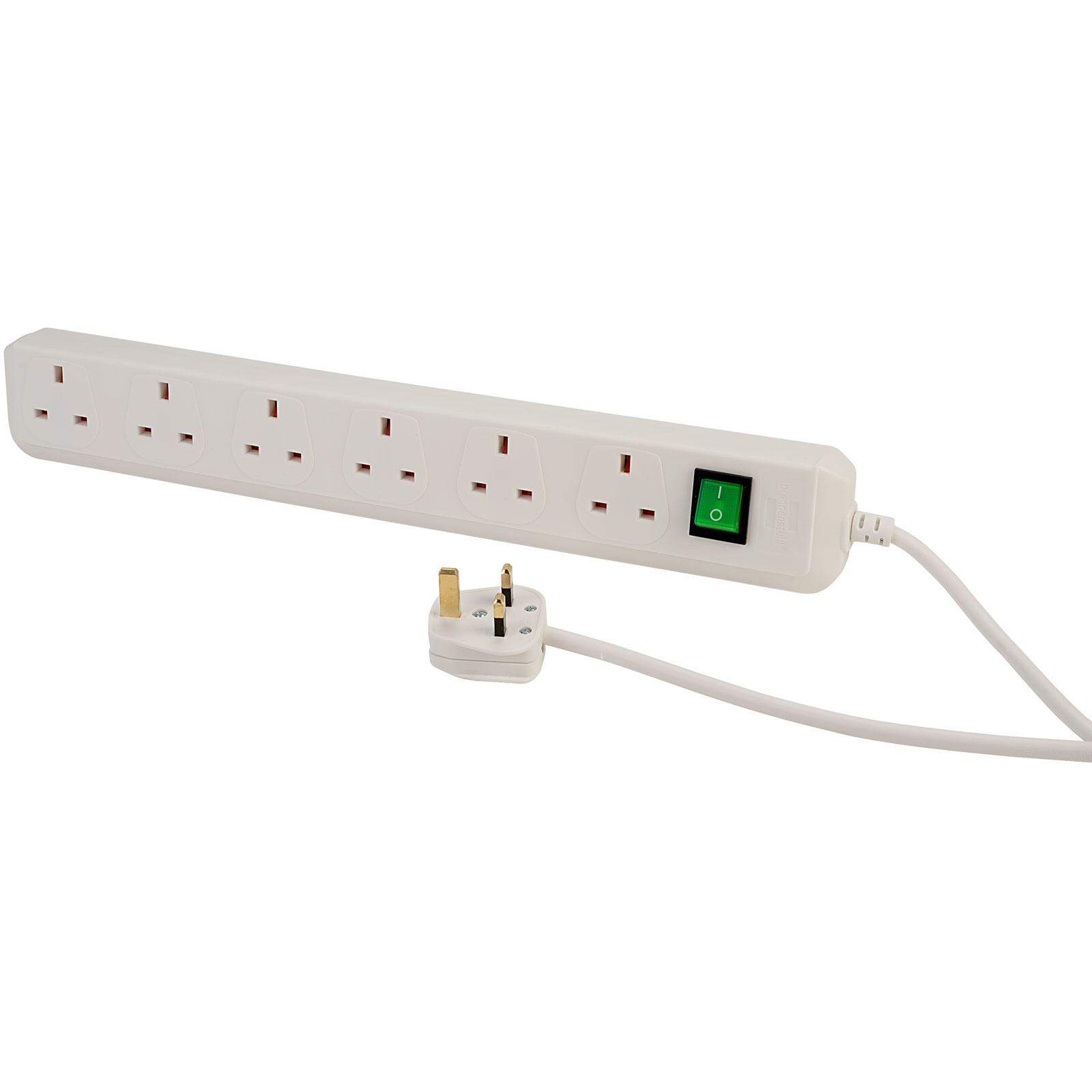
If I was Emperor of the Universe, I'd make the Type G plug the only standard: Longer ground contact that makes contact first, plastic cover on the plug-facing side of the hot/neutral contacts, polarized because there's only one direction to plug it, built-in fuse. Make it recessed, and it's perfect. And since it's rated for 250V/13A, it's great for any household device that doesn't need three-phase power.
Yes, it's chonky, but the more I learn about power plugs and sockets, the more I see how well designed it is. Unless someone from the UK knows if there are actual issues with it :)